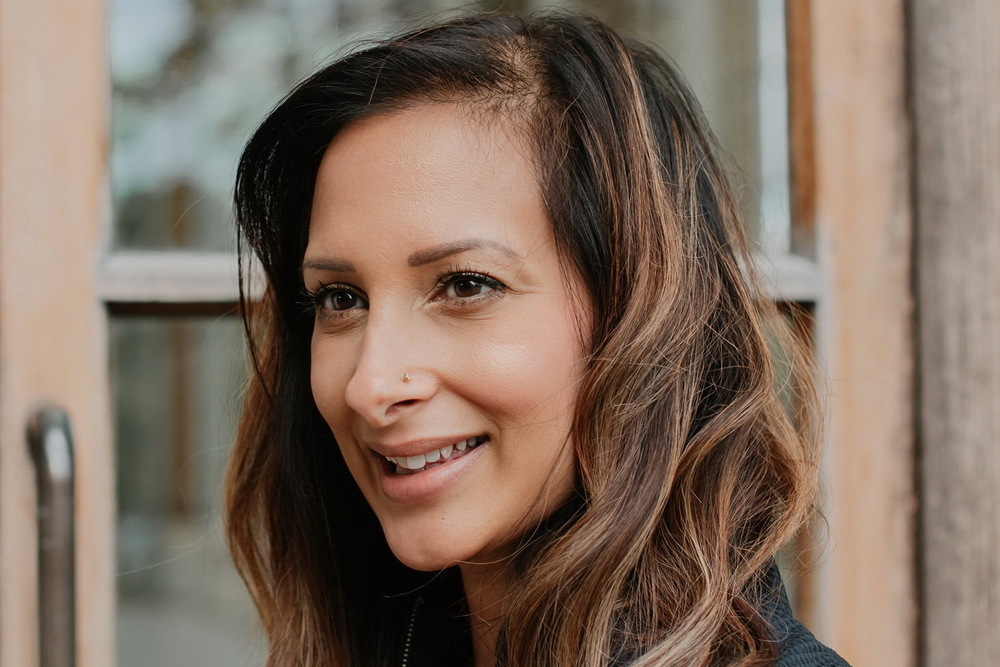
One of the most insightful and action-driven voices in workplace culture and wellbeing is Arti Kashyap-Aynsley, Global Business Leader – Strategy, People & Performance at Ocado Group. Arti will be joining us as a Chair at the Leaders’ Summit at MAD World on 9 October – find out more and register here.
Ahead of her appearance, we spoke with Arti about the future of DE&I and wellbeing – from why disruption can be a catalyst for positive change, to the power of aligning wellbeing with benefits and rewards. She also shares practical advice for leaders on protecting their own wellbeing while supporting others.
Q. What is your biggest focus in your work at the moment?
My working life right now is very much engulfed by both DEI and Wellbeing. This is caused by the changing climate surrounding DEI as well as the ever changing business climate impacting everyone from a wellbeing perspective. I am really seeing the connection between both but also the very many factors that impact these two areas.
Q. Are you having to justify the role of DEI?
Not at all – DEI remains a core part of our strategy. At Ocado, we recognise that inclusive, equitable workplaces don’t just happen by chance – they’re the result of intentional leadership, consistent action and a willingness to evolve.
That said, we are a global organisation, and context matters. With the US being our second largest market, we’re mindful of how shifts in federal policy and societal discourse there could influence both our people and our operations. But rather than retreat, we use these moments as opportunities to reaffirm our values, adapt where necessary, and keep listening and learning. Our approach to DEI isn’t about chasing headlines – it’s about staying grounded in what we know creates belonging, performance and resilience across our business.
Q: Can we evolve? How are you feeling about the change happening in DEI at the moment?
I know it might be an unpopular opinion in some circles, but I actually believe disruption can be a good thing. Challenging the established norms of DEI – or what I sometimes call the ‘world order’ of how we’ve always done things – gives us the opportunity to pause, reset and evolve.
That mindset comes from my background – I spent years as a chartered accountant and management consultant, where disruption was the norm. Industries constantly had to reinvent themselves in response to new pressures, and I see no reason why DEI should be any different.
What we’re experiencing now, especially in this complex geopolitical climate, is forcing deeper reflection. It’s less about blame, and more about asking: are we doing what actually works? Are we being bold enough? Are we truly inclusive in how we shape inclusion? For me, it’s a necessary provocation – and if we’re open to it, it can help us build something stronger, more sustainable, and more human in the long run.
Q: Some DEI professionals have said they feel they’re being ‘blamed’ for the current backlash. Do you think the industry needs to take some responsibility for the polarisation we’re seeing?
It might be controversial to say, but yes – I do think there are times when we, as a field, have missed the mark. There have been moments where DEI efforts, despite good intentions,
have felt exclusionary to some – and we have to be honest about that if we’re serious about progress.
I say this not just as a DEI leader, but as an Indian woman, an immigrant, a mother, someone who ticks many of the boxes society might expect to be ‘amplified’ by these efforts. But I’m also married to a white, middle-class man, and I see his experience too. I’ve watched him apply for roles over the years and be rejected in favour of candidates from more ‘diverse’ backgrounds. That tension – of trying to build fairness while holding space for everyone – is real.
For me, DEI should never be about performative box-ticking. It should be about equity, fairness and meritocracy. I don’t want to be hired because of how I identify – I want to be hired because I’m bloody brilliant at what I do. And that’s the heart of the evolution I think we need: a DEI practice that is bold, balanced and deeply human.
Q: How do we move on constructively from the DEI disruption you’ve described?
I think the first step is reframing disruption not as the end of something, but as the beginning of something better. This is an opportunity for the industry to pause, reflect and ask the harder questions: What’s actually working? Where have we created unintended consequences? And how do we design DEI in a way that feels inclusive to everyone, not just those we’re trying to elevate?
Constructive evolution means shifting from a place of reaction to one of strategy. That might mean reviewing policies, reconsidering the language we use, or thinking more carefully about how we measure impact – but always through the lens of fairness, clarity and long-term sustainability.
At Ocado, we’re actively in this reflective space right now. We’re doing legal reviews to understand where we can confidently and ethically play – especially as we expand into markets like the US, where the risk landscape is shifting. We’re also revisiting our language, adapting how we talk about our work, and evolving our strategy to match where we are now as a business – which is a very different place to where we were three years ago when our original DEI plan was set.
Q: Tell me more about what you’re thinking regarding changing the language around DEI and Wellbeing
I’ll be honest – I get increasingly nervous about the word “diversity” these days. Not because I don’t believe in the importance of difference – I absolutely do – but because the word itself has become so politicised and, in some cases, misunderstood. It can shut people down before we’ve even started the conversation.
Interestingly, while I’ve always placed emphasis on equity and inclusion – with cultural belonging at the heart – even equity is becoming a word we need to handle carefully. Our legal teams, for example, often flag concerns around how it can be perceived or applied,
particularly in the US. There’s a worry that, if misinterpreted, equity could imply unfair advantage rather than fair opportunity – which just shows how complex the terrain has become.
That’s why, for me, the real anchor point is fairness and transparency. What are we doing – as an organisation – to ensure our systems, decisions and practices are fair for everyone? Not just in theory, but in reality. Inclusion is one piece of that. Transparency is another. And
they both sit within a broader commitment to building a culture where people feel they belong and understand how things work.
It’s also why I’m increasingly connecting this work to our talent strategy and commercial priorities. DEI and wellbeing shouldn’t sit in a silo – they need to be integrated into how we hire, develop, promote and retain talent, and aligned with what we stand for as a business. When you position it that way – as a lever for fairness, clarity and performance – people stop seeing it as a side agenda and start seeing it as the strategy.
Q. You’ve talked about collaboration being important to you. For example, you are working closely with your Benefits team at the moment. Why do you think it’s important that Wellbeing works with Benefits in particular?
Wellbeing and Benefits can’t afford to sit in separate silos anymore. The challenges we’re seeing today – from rising mental health concerns to shifting expectations around support – require a joined-up, strategic response. And that means building stronger partnerships.
I’ve been working closely with our Benefits team because I believe there’s a real opportunity to bring a more forward-looking, insights-led perspective into how we shape the overall offer. Without that, there’s a risk that Benefits becomes stuck in a cycle of repeating the same solutions year after year, without necessarily meeting the evolving needs of our people.
Part of the challenge is that traditional ways of gathering feedback – like pulse surveys – can lead to fatigue and don’t always tell the full story. So we’re trying to think differently. Sometimes the most valuable data comes from listening – really listening – to what people are experiencing on the ground. Embedding ourselves in different parts of the business, hearing the nuance, asking the right questions. That’s how you make benefits meaningful, and wellbeing work.
Q. How do you, as a Wellbeing Leader, look after your own wellbeing?
I’ve thought deeply about this – because I’ve lived the consequences of not doing it well.
Like many people, I have a go-to wellbeing toolkit: I exercise regularly, I journal, I try to create space in the day just for me. But over time, I realised I was moving through those things almost on autopilot – doing them because I should, not necessarily because they were helping in the way I needed. It became clear that real wellbeing isn’t just about ticking the box – it’s about being intentional and present in how you care for yourself.
So now, I take a more conscious approach. At the start of each week, I write a wellbeing ‘to-do list’ – not one filled with work deadlines or errands, but a list just for me. What do I
need this week to feel like I’ve lived it well? Sometimes it’s meditation. Other times it’s rest, reflection, connection or simply space to breathe. That small act of checking in with myself – not just physically, but mentally and emotionally – has become one of the most powerful things I do.
As wellbeing leaders, we can fall into the trap of supporting everyone else first. But the truth is, we can only model what we practice. It starts with looking inward, checking in, and giving ourselves permission to show up as humans first.
Q. Given your own experiences of poor wellbeing, what advice do you have for other Wellbeing Leaders on this?
Start with yourself. We can’t lead wellbeing if we’re constantly ignoring our own. And we can’t expect others to thrive if we’re modelling burnout. It doesn’t have to be grand – it just has to be intentional.
My biggest learning is that wellbeing looks different for everyone. For some it’s the gym. For others it might be meditation, walking the dog, gaming, painting, journaling – or five stolen minutes of silence in a chaotic day. What matters is finding what feeds your soul. As leaders, our job is to prevent others reaching breaking point – but that starts with looking in the mirror and asking: how am I really doing? And am I giving myself the space to be well, not just talk about it?