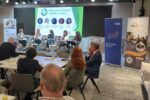

Matt Wilson, Computacenter’s UK Wellbeing Lead, is going to be leading a conversation on digital wellbeing at the forthcoming MAD World Leaders Summit on 9th October, which is a topic close to his heart.
Ahead of this roundtable discussion that he’s facilitating, and his appearance on our new Make A Difference Leaders Podcast (coming soon!), he tells us why he’s so passionate about “taming tech” and the “elephants in the room” he believes the industry must address.
To find out more about the roundtables, and the full agenda for MAD World, see here
Over to Matt…
You’re going to be a facilitator at Mad World Leaders Summit for roundtable eight which is about “taming tech- practical steps to digital wellbeing”. Why are you well placed to facilitate a deep dive conversation on this?
I feel really strongly that it’s important to acknowledge that digital is becoming, more and more, a key wellbeing pillar that organisations need to incorporate into their strategy.
But it’s a bit of an elephant in the room and people need to acknowledge that poor working practices around digital usage and wellbeing can be really impactful on our overall health.
It’s important we talk about this as it’s an emerging space, that’s why things like this roundtable are helping in talking to others and acknowledging the issue.
What do you like about the roundtable format?
People will share their own ideas of what digital wellbeing means to them, which I find really insightful.
From a selfish perspective, I want to take away loads of insights from people with experience of this and who’ve thought about it. And I’m keen to hear both sides of the story, which you tend to get in a roundtable format.
Have you got any controversial facilitation questions up your sleeve?!
Well, managing diaries could be one. I think there’s a responsibility on employers to ensure their people don’t get Teams or Zoom burnout. My personal preference would be to ban back to back meetings in some way, shape or form, but I’ve no idea what that would look like! I’m interested in hearing ideas.
People are craving connectivity because they’re isolated at home a lot of the time, or in hybrid locations, and they’re being driven to connect by digital technology. That’s fine but – also – there are a number of meetings in everybody’s diary where we don’t need to be there. An email will suffice, and freeing up that time could have real benefits; people would have more time to process what’s been said in other meetings, or take a break to have a cup, or tea or look at emails or even go to the loo!
We also need to move away from death by PowerPoint. When I worked for Amazon they banned PowerPoint and you had to present a one page summary for each meeting. The thinking was that if you can’t summarise what you want to talk about in one page, then you need to go away and revise it.
People need to think about, and gather feedback on, whether having a slide deck, for example, actually increases the value and connection of the meeting or not. Or could time be saved not presenting that way?
I also think platforms like Microsoft and Zoom need to think of ways to improve the usage of AI within their technology to make lives easier.
It’s so important we think about the design of the digital workplace and how we spend our time.
Do you think it’s different working for a tech company on this front compared to say, the Council, where you used to work?
No, not really. This is about people working remotely in different locations and finding the best way to work. Like, for example, no one seems to have worked out how to have an effective meeting where you have some people in the room, and some people on a screen. It’s still so awkward. I’d love to hear people’s ideas at the roundtable about this because we need to find a solution; people can’t be penalised for not being in the room.
Your roundtable will also touch on personal responsibility, versus that of the employer, when it comes to digital wellbeing. Tell me about that….
As individuals, we need to be aware of how we best function and best thrive. We need to think about the advice that’s shared by people, the experts, and understand what works best for us under a reasonable amount of stress.
At the same time, we need Leaders who are doing the right thing, role modelling and demonstrating best practice. For example, they take breaks, or drop out of meetings 10 minutes early because they’ve been back to back all day. When you see Leaders doing these things, you will feel more empowered to do it yourself. Without that, policies don’t really mean anything.
What are you looking forward to at Mad World?
I look forward to events like MAD World hugely. They’re a really good chance to see people in person that you see all the time on LinkedIn. For me, it’s like being at Madame Tussauds but without the wax works!
Being around like-minded people always leaves me inspired on the train home. There’s so much shared in-person, in those informal conversations, that can really make a difference to your work and thinking, and provide you with little nuggets that drive you forward.
There are 13 deep dive roundtables scheduled at MAD World on 9th October in London led by experienced, expert professionals in their field. Topics range from the likes of the next generation workforce to absence to action to boardroom buy-in. To find out more about them, and the full agenda and to register, see here
You might also like: