
Posters don’t prevent heart disease. Awareness weeks don’t redesign unsafe jobs. And a helpline number on a wall has never fixed a system that keeps men isolated, exhausted, and silently unwell.
Yet for years, this is how men’s health has shown up at work: symbolic, seasonal, and safely detached from how work is actually organised.
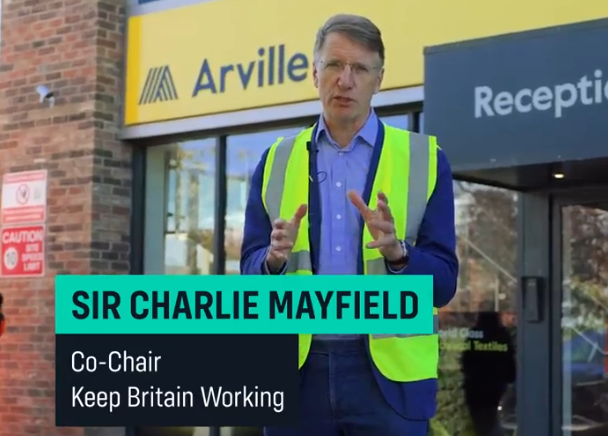
Now, for the first time, national policy is saying what many practitioners have known for decades. The Keep Britain Working review and the Men’s Health Strategy for England make one thing clear: men’s health is a work design, leadership, and systems failure as much as it is public health and employers sit at the centre of the solution.
If we are serious about keeping men healthy, in work, and alive for longer, it’s time to stop mistaking visibility for impact and start building workplaces that do not quietly harm the people who keep them running.
Why I work with men
My interest in men’s health didn’t begin with policy or strategy. It began with men.
I grew up close to my dad. Long before I worked in health and social care, he shaped my values – compassion, kindness, and responsibility for others. Those values, grounded in his practice of Aikido and Buddhism, led me into a career focused on prevention, rehabilitation, and care. I’ve always believed that helping people thrive isn’t just a job – it’s a duty.
Over 15 years, I worked across some of the most complex parts of the health and justice system: children in care, pupil referral units, secure criminal justice settings, substance misuse, homelessness, and dual diagnosis services. These environments were overwhelmingly populated by boys and men.
What I saw repeatedly was not male indifference, but male distress playing out in ways systems failed to recognise or respond to. Boys falling behind in education. Young men cycling through secure settings. Adult men presenting late, often in crisis, after years of compounded stress, trauma, addiction, or physical decline. It became impossible to ignore a simple truth: boys and men were not okay, and society wasn’t protecting them.
The statistics confirm what frontline practice makes painfully visible. Suicide remains the leading cause of death for men under 50. Men account for the majority of deaths from drugs and alcohol. Homelessness is overwhelmingly male. Men still die, on average, four years younger than women in the UK.
I work with men not because they are hard to reach, but because they have been historically easy to overlook.
The reality employers must face
Men account for the majority of deaths from the five biggest killers of working-age adults: heart disease, cancer, suicide, and conditions linked to alcohol and substance use.
They are over-represented in sectors with:
- Long or irregular hours
- High physical demand
- Sedentary or isolating roles
- Low job control
- High exposure to stress and risk
And yet, most workplace wellbeing strategies still assume a one-size-fits-all model of engagement.
Policy now tells us that approach is no longer fit for purpose.
What follows are five system-level actions employers must take if they want their men’s health efforts to align with national strategy – and actually work.
1. Start with heart disease – redesign risky work
Heart disease remains the leading cause of premature death in men – and work plays a far bigger role than we often admit.
Consider long-haul and HGV drivers. Many live in their cabs four or five nights a week. Their work combines prolonged sitting, isolation, disrupted sleep, poor diet access, and limited opportunity for physical activity.
Research published in the BMJ paints a stark picture:
- 84% of lorry drivers are overweight or obese
- 43% have type 2 diabetes or prediabetes
- 34% meet criteria for metabolic syndrome
- Drivers accumulate up to 13 hours a day sedentary, with minimal moderate-to-vigorous physical activity
This is a work design problem not a lifestyle problem.
If employers are serious about tackling heart disease, they must:
- Identify roles that structurally increase cardiovascular risk
- Redesign work patterns, breaks, recovery time, and access to healthy options
- Integrate movement and health promotion into the working day
2. Treat suicide prevention as a workplace systems issue
Suicide is the leading cause of death for men under 50. Yet many workplace responses still rely on posters, helplines, or Mental Health First Aid programmes.
The evidence tells us this is not enough.
Men are less likely to disclose emotional distress in conventional ways. They are more likely to present through anger, withdrawal, risk-taking, presenteeism, or substance use. These signals are frequently missed or misinterpreted.
Effective prevention requires systems that:
- Prevent work-related stress, anxiety, and depression
- Enable early, informal, peer-based support before crisis
- Equip managers to recognise male-pattern distress, not just verbal disclosure
- Provide trusted, visible pathways to help that feel relevant and safe
3. Address work-related stress as a legal and health inequality issue
Work-related stress is one of the biggest drivers of sickness absence due to anxiety, depression, and other stress-related ill health caused by work.
Low control, high demand, poor manager support, effort–reward imbalance, job insecurity, and long hours are all strongly linked to:
- Depression and anxiety
- Cardiovascular disease
- Alcohol and substance use
- Increased suicide risk
Employers already have legal duties under HSE regulations and the Equality Act. What’s missing is consistent, role-specific application.
System-led employers are:
- Conducting job-level stress risk assessments, not generic surveys
- Training managers to prevent stress, not just manage absence
- Treating stress as a design flaw – not a personal weakness
This aligns directly with the Keep Britain Working ambition to reduce avoidable economic inactivity.
4. Integrate mental and physical health – because men experience them together
One of the strongest messages from the Men’s Health Strategy is that mental and physical health must no longer be treated in silos.
For men, the relationship is deeply intertwined:
- Depression increases cardiovascular mortality risk
- Chronic illness increases psychological distress and suicide risk
- Stress, addiction, poor sleep, and inactivity cluster together
Yet many workplaces still separate “mental health” initiatives from physical health and lifestyle risk.
Effective employers are:
- Linking mental health support with screening, education, and prevention
- Normalising conversations about sleep, alcohol, weight, energy, and stress – not just mood
- Delivering interventions in workplaces, where men already engage
This is prevention done properly and it is exactly where national policy is heading.
5. Build male engagement into culture
Men’s health does not improve through one-off initiatives.
Posters fade. Awareness weeks pass. But culture and systems shape behaviour every day.
Men engage when support feels:
- Purposeful
- Practical
- Relational
- Embedded into normal working life
That means:
- Investing in ongoing peer roles, not token champions
- Co-designing initiatives with male employees
- Measuring impact beyond attendance — looking at engagement, referrals, retention, and absence
From policy to practice
The Keep Britain Working review and the Men’s Health Strategy give employers something rare: clarity.
The question now is not whether men’s health matters at work. It is whether organisations are willing to move beyond symbols and build systems that reflect reality.
Men’s health is not a niche issue. It is a workforce issue. A productivity issue. A leadership issue.
And when we get it right, the benefits ripple outward to families, teams, communities, and the economy itself.
If your wellbeing strategy isn’t landing with men, this free webinar breaks down five evidence-based ways to engage men at work without posters or performative wellbeing. You can register free here:
About the author:
Emily Pearson is founder of the Wellbeing Lead Academy and Manbassador with over 25 years’ experience across health and social care, public sector systems, and workplace culture change. Her work focuses on prevention, early intervention, and addressing health inequalities particularly those affecting working-age men. Emily has worked across criminal justice, homelessness, substance misuse, and emergency services, and now supports organisations to design evidence-based wellbeing strategies that move beyond awareness and deliver real system change.
You might also like: