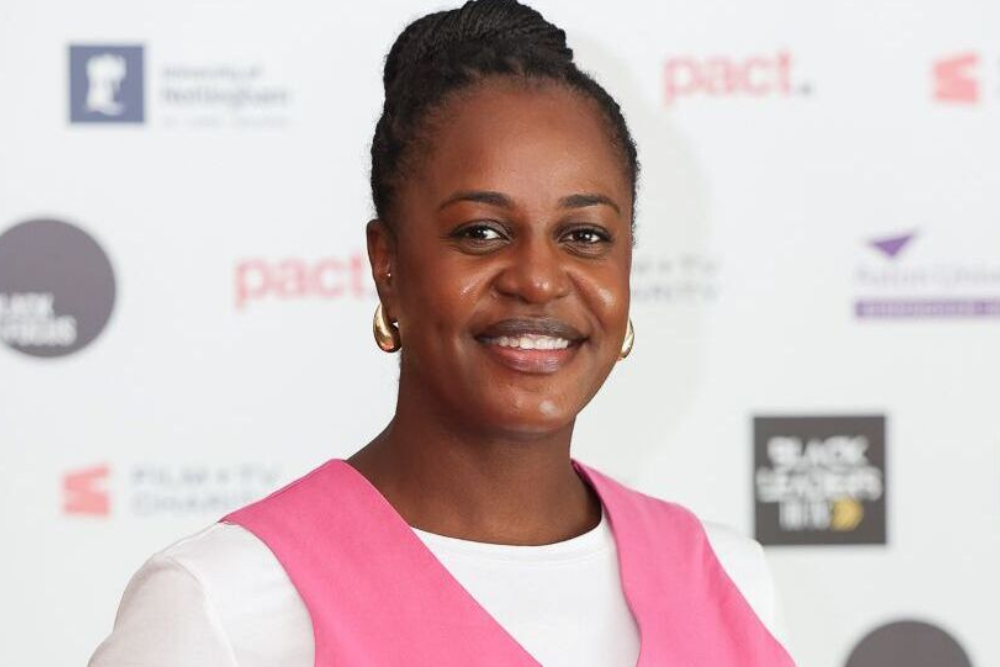
When Ofcom’s Head of Equality, Diversity & Inclusion Annisha Taylor steps onto the stage at MAD World Leaders’ Summit in London on 9th October, she won’t shy away from uncomfortable truths in her Keynote on “DEI in the New World Order”.
If you haven’t already nabbed your ticket, then you can register and see the full agenda, including all the speaker biogs, for MAD World Leaders’ Summit here!
In this interview ahead of her appearance at MAD World, she talks to us about navigating a turbulent six months for DEI, the loneliness of the role and why now is the time for brave, open conversations. She has also had a brave, open conversation with us for our forthcoming Make A Difference Leaders Podcast, which will be coming to a podcast platform near you soon….
You’re an experienced keynote speaker and you’re speaking at MAD World Leaders’ Summit on 9th October in London. Why are you making time for this event in your busy diary?
I’ve always heard great things about MAD World Leaders Summit, but this is actually my first time coming, and the speakers are really impressive.
I’m looking forward to listening and to meeting people in person that I’ve admired from afar for some time.
At events like MAD World, you can have real, honest and open conversations that address the reality of operating in the space of EDI at the moment.
Given everything that’s happened and the political backlash, now is the time for us to talk really openly about what this means for us as individuals who are operating in this space, but also for organisations which are also navigating unprecedented times.
You’re an experienced DEI professional that has seen many ebbs and flows. But sounds like recent months have been particularly tough?
Yes. It’s been a really tough six months. Personally, I’ve never felt the need to justify my existence as much as I have recently. It’s been a weird space to be in.
And, to be clear, I’m not talking about my employer, they remain committed to their EDI efforts – I’m talking about wider than that, in the broader business sense.
It’s an interesting time, and I’ll be honest, also quite lonely at times, which is why meeting with others in the same situation is important.
What keeps you going?
My children.
They’re five and eight and my hope is that when they come into the world of work, they don’t face the same barriers that I’ve experienced. I’m not talking about opening doors for them or nepotism, I’m talking about just having access to the same opportunities, resources and mentors as everyone else.
You’re talking about a very meaty subject at MAD World. ‘DEI in the new world order’, touching on evolving geopolitics and shifting cultural norms. Any topline thoughts on what you’ll cover?
In terms of staying ahead, it’s about working out what EDI truly means in your organisation and what it is you are trying to achieve. How do you want your employees to feel?
Are colleagues of all identities equally as happy? Are all employees getting equal opportunities to grow and progress? Would all employees say that your internal culture feels the way it’s described on your external facing website?
If the answer to any of these questions is ‘no’, then my opinion is that you have the power to rewrite the story of your workplace that truly reflects who you are, and what you stand for.
Do you think there is an updated business case for DEI?
I think so, yes. I’m still in two minds in terms of whether it’s a good change or not but there are instances where the update has made a positive difference. As has the focus and spotlight on EDI.
It’s made companies really think: what does this strategy really mean? What does this strapline really stand for? How can they be more than words on a page?
The focus on EDI has made people strengthen their messages and look at the alignment in between business values and moral values, as well as the impact on the bottom line.
There is much evidence now that good employee wellbeing and a sense of belonging has a positive impact on business. However, how do we make people ‘feel’ that, especially senior management?
I think the best way is to help them understand the impact of not doing anything and the negative consequences that can have, not only on staff morale and productivity, but also on your brand and reputation.
To hear Annisha and other high profile speakers in the Health and Workplace Wellbeing world talk, register for MAD World Leaders’ Summit on 9th October in London here
You might also like: