
Microsoft’s Benefits Consultant and EMEA Lead of Families, Karen Sancto, will be talking to MAD World audiences on 9th October about what employers can do when pay can’t stretch further.
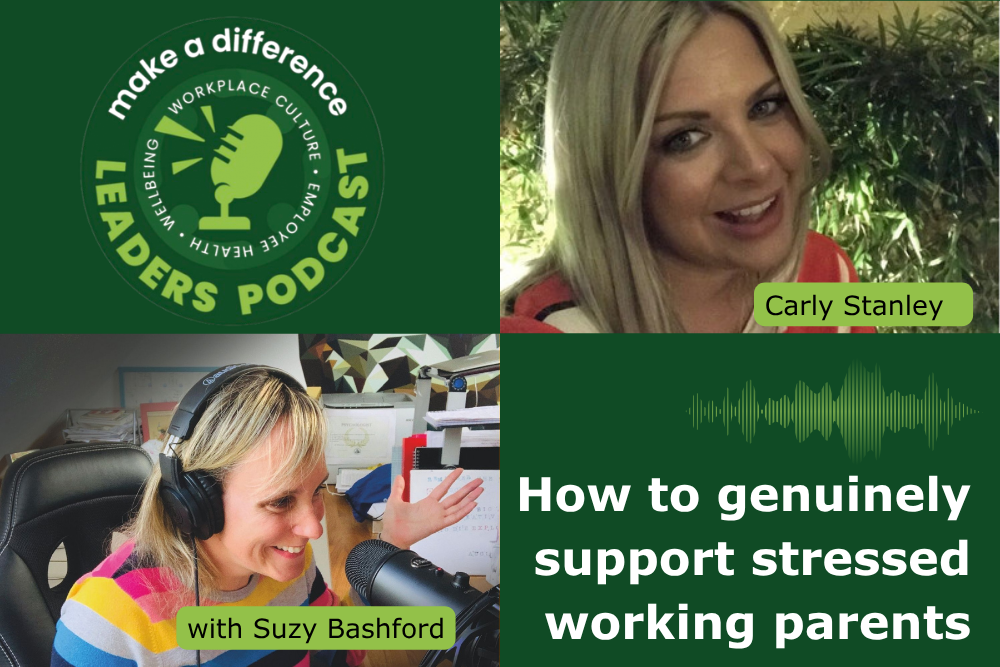
In this Q&A interview ahead of her appearance at the conference, she tells us why she feels so passionate that Health and Wellbeing needs to be the “absolute thread going through” benefits and that these benefits need to go way beyond “just Healthcare, Life Insurance and Basic Protection”. Karen expands on these issues in depth, and particularly getting the best out of suppliers, in our forthcoming Make A Difference Leaders Podcast, too (coming soon, watch this space!).
To read the full agenda for MAD World Leaders Summit and find out more, see here
Over to Karen….
On your recent Make A Difference Leaders Podcast (coming soon!) you talked about the need to nurture suppliers and these are skills that come naturally to you. What skills are these?
Tenacity, a good balance of diplomacy and empathy, and a good dose of negotiation skills too! I would say I’m very committed to getting an outcome, and can be quite tough when needed.
I work from home 100% of the time and value all my working relationships – I spent as much time, if not more, engaging with external suppliers, as I do with my Microsoft colleagues, so it’s important to nurture these in order to fulfil my wellbeing needs by connecting with people.
What do you see as the link between Benefits, which you specialise in, and Health and Wellbeing?
Wellbeing is the absolute thread going through our benefits. Benefits is all about supporting employee wellbeing. The industry has moved on above and beyond just Healthcare, Life Insurance and Basic Protection.
Now we need to really look at preventative health and supporting our employees’ families.
How do you prove the investment case for supporting employees’ families?
Well, it’s hard to get a return on investment sometimes with Wellbeing because it’s more about value on investment.
For instance, if you’ve helped support someone’s child through a cancer journey you aren’t necessarily going to see the impact of that in the numbers and it’s hard to measure the extent to which that person has felt protected and supported. But they will tell their colleagues, their friends and their external network. They will tell their story, and the power is in the storytelling, and reinforces our culture.
Is it hard to make the business case for Health and Wellbeing at the moment?
It’s harder to cut out once you’ve introduced it, so at Microsoft we’re lucky to have a rich offering of services. We are investing more and more in global vs local benefits.
What’s your biggest challenge?
Employee demands are changing all the time and people want benefits in a different way. They want them when and where they need them. They want more personalisation and they want to use the latest tech. Just look at virtual GPs – they used to be a ‘new’ thing but now they are commonplace.
We’ve just done a massive deal with Benifex to enroll their engagement platform out globally, which will be a changemaker for us.
And now we’re moving into AI…
How are you feeling about AI?
I think we are leading the way at Microsoft but our focus is doing it in an ethical way…
You’re talking about equity, resilience and financial wellbeing and what to do when pay can’t stretch further, at MAD World. Can you give us a flavour of what you’ll cover?
I’m talking alongside Jamie Broadley, Group Head of Health and Wellbeing at public services company Serco, so I’m coming at it from a different angle because we have high earners. But with that there’s sometimes the assumption that our employees don’t have an issue with financial wellbeing – which is not the case.
We have a lot of employees with certain expectations about what are able to earn, and what they are able to spend, and they’ve got more to lose if things go wrong. My biggest learning is don’t assume, and communicate with everyone.
What other learnings have you had about improving employee financial wellbeing?
Just because an employee is a high earner doesn’t mean they know the basics about financial education such as saving, budgeting and tax savings. And again, there is power here in storytelling and getting peers talking to each other about how they use their benefits.
At MAD World you’re also going to be talking about diversity in benefits programmes. Again, can you give us kind of a top line where your thinking is on that?
I plan to talk about women’s health and family support. We have a global programme through Maven that I’ll talk about, which covers so many aspects of the employee experience including fertility, adoption and surrogacy, and parenting.
We also have a healthcare supplement programme which covers neurodiversity, and a raft of other situations people need support for.
What are you most looking forward to about coming to MAD World on 9th October?
The case studies and the stories.
And hearing about successful supplier relationships and partnerships.
I’m especially looking forward to hearing the challenges that people have had, and how they’ve overcome them, as well as where people see the future.
You might also like: