Even mild dehydration can have a real impact on how we feel at work and in life, causing headaches, fatigue, reduced alertness and poorer concentration. And whether you’re sitting at a desk or on your feet all day, drinking enough water plays a direct role in how you feel, think and perform at work.
However, hydration is one of the first things to be overlooked during a busy working day, as indicated by a 2025 UK National Hydration & Wellness Survey which found that 58% of UK adults are chronically dehydrated.
Why water matters
Our bodies are approximately 60% water, therefore hydration is essential for nearly every function in the body. It supports temperature regulation, circulation, digestion and cognitive performance, which means water is as much a wellbeing issue as it is a work performance one too.
Our busy workdays are often structured in a way that makes hydration easy to forget. Long meetings, screen-heavy tasks, commuting, and pressure to “push through” can all mean that getting enough water onboard can be easily forgotten or deprioritised.
NHS guidance recommends a steady intake of water across the day, around 6 – 8, 240ml cups. However, it is estimated that three quarters (41 million) of UK adults are not meeting this threshold, with the average water intake amongst them being 726ml, around half of the lower end of the NHS recommended daily amount.
The workplace impact
By the time you feel thirsty, you’re likely already feeling the effects of mild dehydration, things to look out for include:
- A dip in concentration
- Slower decision making
- Irritability
- Low energy
- Poor memory
In roles that require focus, accuracy or customer interaction, that can have a real knock on effect on performance. Depending on your role, the effects of under hydration can actually be dangerous, if you are operating heavy machinery for example.
To limit the negative impacts of dehydration, UK workplace regulations place a duty on employers to provide an adequate supply of wholesome drinking water that is readily accessible. In other words, hydration is not just a nice-to-have, it is part of a safe and compliant workplace environment. With that being said, many employers meet just the bare minimum for this requirement, offering not much more than the standard mains fed kitchen tap, which really doesn’t do much to elevate the experience or provide better tasting filtered water that employees would be enthusiastic to consume.
What the research shows
A workplace study published in 2022 found that a simple hydration intervention (using reminders to hydrate via an app) significantly increased water intake, leading to positive physical effects such as lower blood pressure and increased lower-limb strength. It also had a butterfly effect, improving other health and wellness behaviours for those who participated.
This shows that hydration habits can improve with relatively simple support. When reminders were switched on, water intake increased, when the reminders stopped, intake fell again. That suggests the workplace environment has a strong influence on hydration behaviour and overall productivity.
Employers should take note because it means hydration isn’t just about individual discipline, it’s also about design, nudges and ease of access.
Improving hydration at work
The good news is that improving hydration at work doesn’t need to be complicated. Small changes can make a big difference. It’s as much about ease, consistency of messaging and perception as it is access. Especially if the intention is to make hydration a part of the everyday routine, as it should be.
Practical steps include:
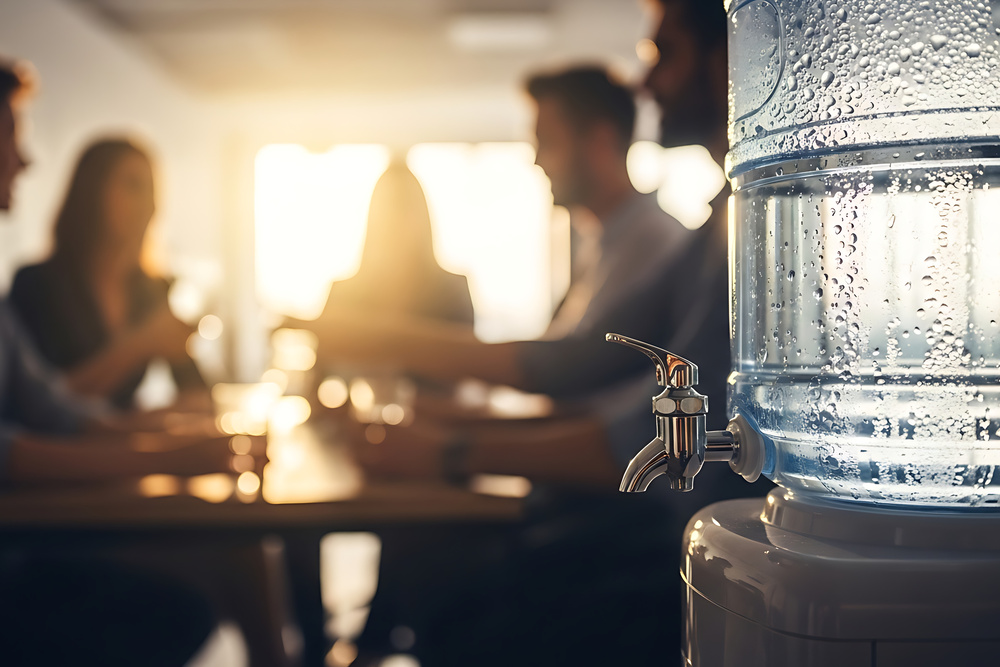
- Making water easy to access with refill stations or dispensers
- Encouraging employees to keep a reusable bottle at their desk
- Adding hydration reminders (internal comms, posters, team updates etc)
- Encouraging water to be brought to meetings
- Encourage employees to take time away from their desk to hydrate (bring back watercooler culture)
For employers, the benefits of a well hydrated team are clear, they’ll feel more alert, comfortable and able to sustain concentration throughout the day. In turn this will make for happier employees, support morale and contribute to a healthier workplace culture.
Most workplaces won’t have the infrastructure or resources to implement a digital reminder system as used in the study referenced above, but a much more cost effective way of helping remind employees could include having a schedule of what a good hydration plan for the day looks like when referencing the NHS daily guideline amounts. These could be given to each employee, left in prominent places around the office and reiterated in company communications.
A simple schedule could look something like:
- 09:00 – Glass 1 on arrival at work
- 10:30 – Glass 2 with mid morning snack
- 12:00 – Glass 3 with lunch
- 13:30 – Glass 4
- 15:00 – Glass 5 with snack
- 17:00 – Glass 6 on departure
Other factors affecting hydration at work
Although the benefits of drinking more water are clear, there are still some other factors outside of forgetfulness and a busy schedule that can still hamper our efforts of getting enough water onboard. Most notably.
- Confidence in water cleanliness and quality – Although UK workplace regulations place a duty on employers to provide an adequate supply of wholesome drinking water, for many employers this can still be water from a mains tap, usually a kitchen. This can be offputting for many, and rightly so, with 2,487 incidents of pollution affecting English water in 2024 alone. The taste can usually be unsatisfactory when compared with other alternatives such as filtered water too. Water dispensers that offer quality filtered water that is clear for all to see is the easiest and most transparent way of addressing such issues. People will be more likely to drink more water when they trust and enjoy it.
- Kitchen and utensil cleanliness – The saying “we eat with our eyes” is very true, so if you have a kitchen that is not well maintained then the likelihood of employees wanting to use mugs and cups and fill up from a kitchen tap is going to be slim.
- Location of water dispensers – If you have invested in a water dispenser but it isn’t getting used as frequently as you’d hoped, changing its location could be the key. It needs to be in a location where it is easily accessible and not too far from employees’ working locations so they don’t have to work hard to find it. You could also take a lead out of the supermarkets play book by eliciting a “Super Stimulus” response to drinking water by placing the dispenser near the all too popular snack trolley. When employees go for a mid-morning packet of crisps or chocolate bar, they may feel more compelled to wash it down with a fresh glass of clean water from the dispenser too.
A simple habit with real value
As humans, hydration is one of our most basic needs, and also one of the easiest workplace wellbeing habits to support, but it is often one of the most overlooked. However, its impact on our productivity and wellbeing cannot be overstated.
For employees there are no negatives that can come from making sure your team is well hydrated.
And remember it’s not about one big initiative, it’s created through small, consistent choices that make drinking water part of the workday and eventually a habit.
About the author:
Jeremy Simpson is Marketing Director at Culligan UK, leading the company’s brand growth, demand generation, and market expansion efforts. At Culligan, he is focused on elevating the role of water in the workplace, helping organisations improve wellbeing, sustainability, and performance through smarter hydration solutions.