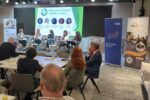

At the final Make A Difference Leaders’ Lunch of 2025 – sponsored by Personify Health and hosted by Ipsos Karian & Box – senior leaders in HR, occupational health, wellbeing, DEI, health and safety, employee benefits, and organisational culture came together to take stock of a turbulent year – described more than once as “funky… and not in a good way” – and to consider what employers must prioritise in 2026.
Against a backdrop of tight budgets, organisational restructures, workforce anxiety, rising sickness absence, and geopolitical uncertainty, participants were candid: wellbeing is at a crossroads. Yet the session also revealed deep pockets of innovation, resilience and progress, especially where organisations have stayed data-led, invested in leadership capability, built psychologically safe cultures and collaborated across functions.
The newly published Keep Britain Working review added crucial context. Leaders debated the practicalities of becoming a Vanguard organisation, the role of the proposed national Health & Work Intelligence Unit, and how to translate the review’s ambitions into real progress on the ground.
Wellbeing is at a crossroads
Across the panel contributions and roundtable discussions, four themes emerged clearly:
| 1. Leadership capability will make or break progress in 2026 | Visible, human and accountable leadership – not standalone wellbeing initiatives – is now seen as the defining factor of organisational health. |
| 2. Data maturity is no longer optional | The shift from “initiatives” to measurable, evidence-based people strategy is accelerating fast. |
| 3. A reset in language and framing is needed | Many argued that the word “wellbeing” has become too diffuse or trivialised; 2026 may require a rebrand focused on “people risk”, “enhancing people capital” or “health engagement”. |
| 4. Cultural nuance and system design matter more than ever | Employers must better tailor approaches by generation, job type, geography, working conditions and identity – a cross-cutting theme echoed repeatedly. |
Despite a tough year, optimism surfaced: organisations with strong leadership support, clear data and collaborative cross-functional working continued to make meaningful strides in 2025. The insights below capture the essence of the collective intelligence shared.
Setting the context: Dame Carol Black GBE

Pioneer and foremost expert of employee health and wellbeing Dame Carol Black GBE opened the session by inviting attendees to reflect on three questions:
- What has gone well, and what has been challenging in 2025?
- What do you most want to achieve in 2026 that will genuinely move the dial?
- How should employers respond to the Keep Britain Working review?
She emphasised the review’s call for better data to show employers what does and doesn’t work, the establishment of Vanguard employers – a group of 60 early adopters, including British Airways, Google, Sainsbury’s, Holland & Barrett, Mayoral Combined Authorities and SMEs – who will develop and refine workplace health approaches over the next three years to build a stronger evidence base, and the proposal to create a new Health & Work Intelligence Unit.
Before opening to the attendees for their thoughts, a panel of experts shared their perspectives.
A divided year: “Funky… but hopefully pivotal”

Jill King, SVP International, Personify Health
Jill offered one of the most provocative thoughts of the day: “I think the wellbeing industry needs a rebrand.”
She argued that 2025 exposed a widening gap between organisations undertaking sophisticated, data-led work and those who, under pressure, defaulted to low-impact “tick-box” activities that fail to influence outcomes or secure sustained investment.
Jill suggested a future framing around reducing people risk and improving health engagement. This better reflects the strategic importance of the work and resonates with executive decision-makers.
Collaboration as the catalyst

Dr Clare Fernandes, Medical Director EMEA, Haleon
Despite the pressures of 2025, Clare highlighted genuine progress through:
- Deeper cross-border collaboration
- National input into the Keep Britain Working review
- International work with the World Health Organisation and the International Labour Organisation
- Stronger integration of employee benefits data into health strategy
She argued that effective collaboration – internally and externally – is the accelerator employers need in 2026, especially when resources are tight:
“Collaboration is what enables us to thrive together and gain leadership buy-in.”
Dr Clare Fernades
A shift toward human-centred leadership

Katherine Billingham-Mohamed, Leadership & Engagement Director, Ipsos
Katherine framed employee wellbeing as an outcome of strong culture and leadership.
She has seen encouraging progress in organisations moving from surface-level wellbeing activities to deeper, structural drivers: looking at things like job design, workload, organisational design and personalised support for different demographics (particularly menopause, trans inclusion and neurodiversity) and essentially course leadership capability.
She also flagged an emerging challenge for 2026: the need to support employees – and leaders – through AI adoption, which she framed as “a culture, mindset and skillset change, not just a tech change.”
Voices from the room: reality check and green shoots
The open discussion that followed revealed the breadth of experiences across sectors. Several themes stood out:
1. Funding cuts and “panic decisions” are hitting hard
Many shared stark examples:
- Wellbeing and DEI budgets frozen or reduced
- Consideration of removing cancer cover to reduce PMI costs
- Leaders questioning whether employees on long-term sick were “really sick”
“In a nutshell, people seem to have forgotten the humanity.”
2. Yet many organisations are delivering exceptional progress
There were also standout success stories:
- TfL’s new wellbeing plan and exemplary health-data insights from its health-check kiosks, which are helping to secure senior leadership buy-in
- Engagement in wellbeing at KP Snacks has never been higher and this is reflected in year-on-year reductions in wellbeing age, as well as a reduction in short-term absence
- Manufacturing company Abraham Moon & Sons’ knowledge-transfer partnership with Leeds Beckett University which digitises standard operating procedure training to enable squeezed middle managers to support team members in other areas such as wellbeing
- Fast-maturing cross-regional health strategies in multinational organisations
“Absence is always a reflection of culture.”
3. The profession is wrestling with its identity
Across participants, a consistent sentiment emerged: The word “wellbeing” isn’t working.
Some argued it is too broad and easily misinterpreted, is associated with low-value activities, fails to compel the C-suite, and does not reflect the complexity of the work.
Yet others cautioned against abandoning it entirely, emphasising the need for education, shared language, and strategic reframing, not wholesale replacement.
The Keep Britain Working Review: promise and practicalities
The publication of the Keep Britain Working review formed a critical backdrop. While many welcomed the Review’s national recognition of employer responsibility – alongside employee and government responsibility – several concerns emerged. These included the pace and clarity of implementation, the risk of policy disruption, the challenge of applying large-organisation models to SMEs, and the limitations of using sickness absence as a measure of success.
Inside the Vanguards: early thoughts
Representatives from Transport for London, PwC and Haleon – all Vanguards – shared early thoughts around:
• Understanding what data will need to be collected to support benchmarking for instance:
- Across disability, long-term sickness, return-to-work rates
- Reasonable adjustments and job design
• Clarity on “what good looks like” is urgently needed
A shared framework will help create a consistent standard for practice.
• Connection and early intervention are key to supporting people back to work
Organisations can find it hard through data and communication to manage long-term sick employees. It can be hard to ensure the employee while off sick maintains connection with the organisation; employers want guidance on the right boundaries and expectations.
Roundtable insights: eight priorities for 2026
Roundtable discussions brought rich insight into what leaders believe must take centre stage next year.
1. Leadership capability & human skills
This was the strongest recurring theme across all tables.
Priorities included:
- Human-centred leadership development
- Teaching leaders how their own psychology affects performance
- Coaching leaders on their personal wellbeing
- Reducing over-reliance on line managers by improving system design
“You can’t embed health and wellbeing without leadership accountability”
2. Data Maturity & Evidence-Based Strategy
Key elements identified:
- Strengthening capacity for data analysis
- Linking wellbeing metrics with performance and productivity
- Understanding “unknown costs” such as legal risk, presenteeism and turnover
- Better integration of qualitative listening with quantitative dashboards
3. Personalisation and Generational Nuance
Leaders highlighted:
- Tailoring approaches for the “Covid generation”
- Expanding focus on male health, fertility, menopause and neurodiversity
- Designing multi-generational support for five generations in one workforce
- Cultural nuance across global markets
4. Reframing Workload, Job Design & Organisational Structure
Recurring issues included:
- Overwhelm
- Distraction and constant task switching
- Lack of clarity around priorities
- Outdated structures that push people into management roles they do not want
Participants highlighted progressive models separating career progression from managerial responsibility – an approach gaining momentum.

5. Embedding Inclusion & Removing Systemic Barriers
Themes included:
- Embedding reasonable adjustments
- Strengthening inclusive cultures, not just inclusive policies
- Supporting the wellbeing of content creators, customers and contributors
- Using inclusion passports and reflective practice
6. AI Readiness: A Culture, Capability & Wellbeing Issue
AI came up in every roundtable.
Key points:
- Supporting leaders and employees through AI-related change
- Using AI tools for health and wellbeing engagement where appropriate
- Addressing anxiety, skills gaps and job redesign
- Leveraging AI literacy as a hook for wider engagement
7. Smarter Use of Existing Benefits & Programmes
Tables emphasised:
- Maximising utilisation of existing employee benefits
- Improving communication and education
- Reducing waste by aligning benefits with actual needs
- Moving from “push” communications to “pull” engagement
8. A Holistic, Preventative Approach
One table introduced the concept of: “The 360° human footprint of work.”
This included:
- The need to revisit basics such as sleep and nutrition
- Consideration of community impact
- Early intervention in behaviour and culture
- Alternative dispute resolution
Conclusion: A Year of Hard Truths – and a Turning Point
If 2025 exposed the fragility of wellbeing across UK workplaces, the Leaders’ Lunch showed something more important: a determination to rebuild with more rigour, more evidence, more realism and more humanity.
Across the room there was a clear sense that 2026 must be the year employers:
- Get serious about leadership capability
- Invest in data maturity and measurement
- Reframe wellbeing in strategic, commercial terms
- Design work sustainably for every generation
- Prepare people for AI-driven change
- Collaborate internally and externally
- Focus on prevention as well as intervention and rapid rehabilitation
- Personalise health and wellbeing to support inclusion and engagement
- Maximise existing resources with an agile offering that withstands organisational change
Perhaps most importantly, the discussions revealed a shared belief that employee health and sustainable performance are inseparable, and that to have real impact, wellbeing – whatever we call it next – must be woven into organisational culture, leadership and strategy.
The Make A Difference Leaders’ Club will continue to foster the collaboration that enables employers to enter 2026 with clarity, courage, and renewed commitment to meaningful change.
A message from the Make A Difference Leaders’ Club sponsor:

As we reflect on 2025 and look toward 2026, organisations need clarity – not assumptions – to make meaningful progress with the health and performance of both their people and their organisation. The Personify Health Maturity Assessment provides a clear, evidence-based picture of where you as an organisation stand today, highlighting strengths, gaps and the most impactful priorities for the year ahead.
It transforms your wellbeing strategy from ‘good intentions’ into a focused, action orientated roadmap. By knowing exactly where you are, you can move forward with confidence, purpose and measurable impact.
And the best bit? It’s completely free of charge! Please make the most of this fantastic opportunity and complete the Maturity Assessment today.
You can find out more about the Make A Difference Leaders’ Club and apply to join here.
You might also like: