
Resilience has become a difficult word in workplace wellbeing.
For some, it represents an essential capability that helps people adapt, recover and navigate challenge effectively.
For others, it has become associated with the idea that employees should simply cope better, work harder or tolerate unhealthy working conditions.
The word itself is not the problem. The challenge lies in how resilience is understood and applied within organisations.
A broader view of resilience
When resilience is viewed solely through the lens of individual capability, it can appear disconnected from the wider organisational factors that shape people’s experience at work. These psychosocial factors – including workload, leadership, role clarity, team relationships and organisational culture – are crucial in determining how people respond to challenge.
Viewed in this context, resilience becomes something much broader. Not a personal trait or a wellbeing initiative, but a capability that emerges through the interaction between people, teams and the environments in which they work.
That distinction matters because how organisations define resilience ultimately shapes how they attempt to build it.
This article explores what resilience really means, why it matters now, and why building resilience requires more than developing individual capability alone. It also shares insights from a recent client case study and introduces a practical framework for strengthening resilience across people, teams and organisations.
The most common mistake
The most common mistake organisations make when talking about resilience is treating it as something that sits within individuals.
The conversation often focuses on helping people manage stress, regulate emotions, maintain perspective and recover from setbacks. These skills matter. The ability to respond constructively under pressure, adapt to change and maintain wellbeing during challenging periods can make a meaningful difference to both individual experience and performance.
However, individual capability is only part of the picture.
People do not experience pressure in isolation. Workload, management style, team relationships, organisational culture and the broader operating environment all influence how people experience and respond to challenge.
Individual capability alone cannot compensate for poor organisational conditions. Equally, a supportive environment cannot entirely remove the need for people to navigate uncertainty, change and pressure effectively.
The most resilient organisations recognise both realities.
Rather than treating resilience as something employees either possess or lack, they understand it as something that can be strengthened across multiple levels of the organisation.
Resilience is built across self, team and system
These ideas informed the development of a recent framework exploring workplace resilience through three interconnected levels: self, team and system.
Self – this includes capabilities such as emotional regulation, self-awareness, recovery, adaptability and the ability to maintain perspective under pressure.
Team – psychological safety, trust, communication, feedback and healthy working relationships all influence how effectively teams respond when challenges arise.
System – leadership behaviours, workload expectations, role clarity, policies, support structures and organisational culture all shape the conditions in which people work.
When these three layers work together, resilience becomes something more than an individual coping mechanism. It becomes an organisational capability.
Importantly, this perspective also helps move the conversation away from the idea that resilience is about enduring difficult circumstances.
Resilience is not about tolerating unhealthy working environments.
It is about creating the conditions that enable people, teams and organisations to adapt, recover and perform sustainably through challenge and change.
Why this matters now
Organisations continue to navigate economic uncertainty, rapid technological change and evolving workforce expectations. Hybrid working has transformed how teams connect and collaborate. AI is reshaping roles and responsibilities. Information overload has made attention one of the scarcest resources at work.
Against this backdrop, resilience becomes increasingly important.
Not because organisations should expect more from people, but because uncertainty, complexity and change have become permanent features of working life.
The organisations that navigate these challenges most successfully understand that resilience is shaped by more than individual capability. They deliberately create environments where people can perform well without compromising their health, wellbeing or relationships.
Case study: what this looks like in practice
Earlier this year, Butterfield Bank partnered with Work Well Being to deliver a resilience programme for approximately 300 employees and managers across Jersey, Guernsey and London.
The programme was designed for both employees and managers, reflecting the understanding that resilience is shaped not only by individual capability, but also by leadership, team dynamics and organisational culture.
The focus was not on helping people simply cope better. Instead, the programme explored practical ways individuals, managers and teams could strengthen sustainable performance within a complex and changing environment.
This reflects a broader shift taking place across many organisations.
Increasingly, leaders recognise that wellbeing and performance are not competing priorities. Sustainable performance depends upon creating the conditions that allow people to manage pressure effectively, collaborate well and recover appropriately.
Viewed through this lens, resilience becomes less about individual capacity alone and more about collective capability.
Three questions for leaders
For organisations looking to strengthen resilience, three questions may be worth considering:
- Are we treating resilience primarily as an individual responsibility, or are we also paying attention to team and organisational factors?
- How effectively do our teams support trust, communication and psychological safety during periods of pressure and change?
- What aspects of our culture, systems and ways of working help people perform sustainably, and which may be making this more difficult?
The answers will often reveal that resilience is influenced by far more than individual skills alone.
A more useful definition
Perhaps the question is not whether resilience matters. The more useful question is what we mean when we use the word.
Not a personal trait.
Not a workshop.
Not a wellbeing initiative.
But a capability that helps organisations navigate uncertainty whilst protecting both performance and wellbeing.
For those interested in exploring this perspective further, The 10 Principles of Workplace Resilience provides a practical framework for strengthening resilience across self, team and system. https://www.work-well-being.com/ourblog/workplace-resilience-guide
About the author:
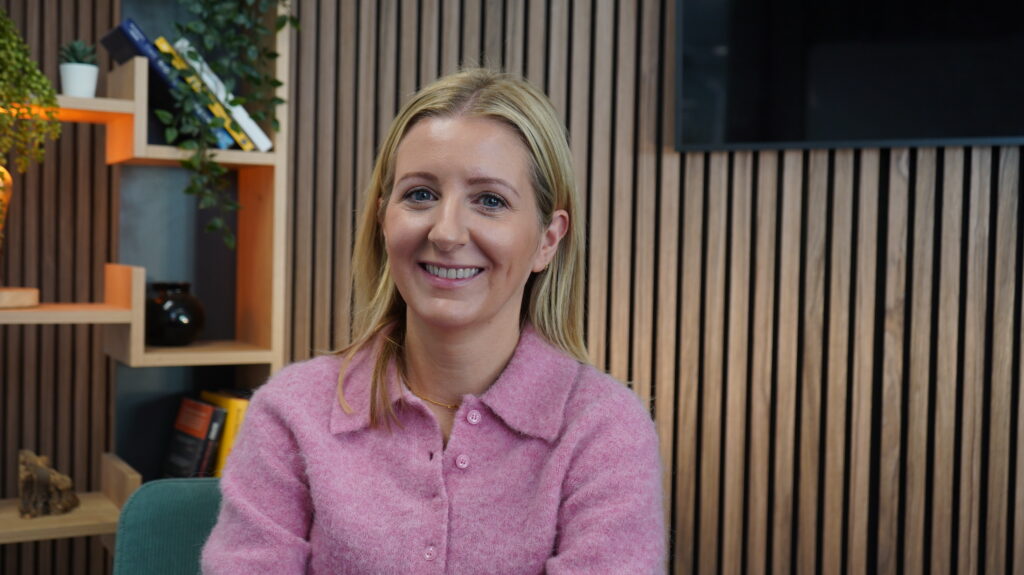
Louise Padmore is the Founder of Work Well Being. After more than a decade in senior roles within fast-paced corporate environments, she founded the business in 2014 to help organisations create healthier, more sustainable ways of working. With a BSc in Management Science from Alliance Manchester Business School, Louise leads a multidisciplinary team supporting organisations across the UK and internationally to develop the human skills that strengthen wellbeing, leadership, team effectiveness and sustainable performance.
You might also like: