
Across my career, from the Army frontline to boardrooms of global brands and professional services, one question has followed me everywhere:
How do we build workplaces where people feel they belong and can do their best work?
Thriving workplaces aren’t built by chance. Shouldn’t they be shaped by how we lead, listen, and build trust across difference?
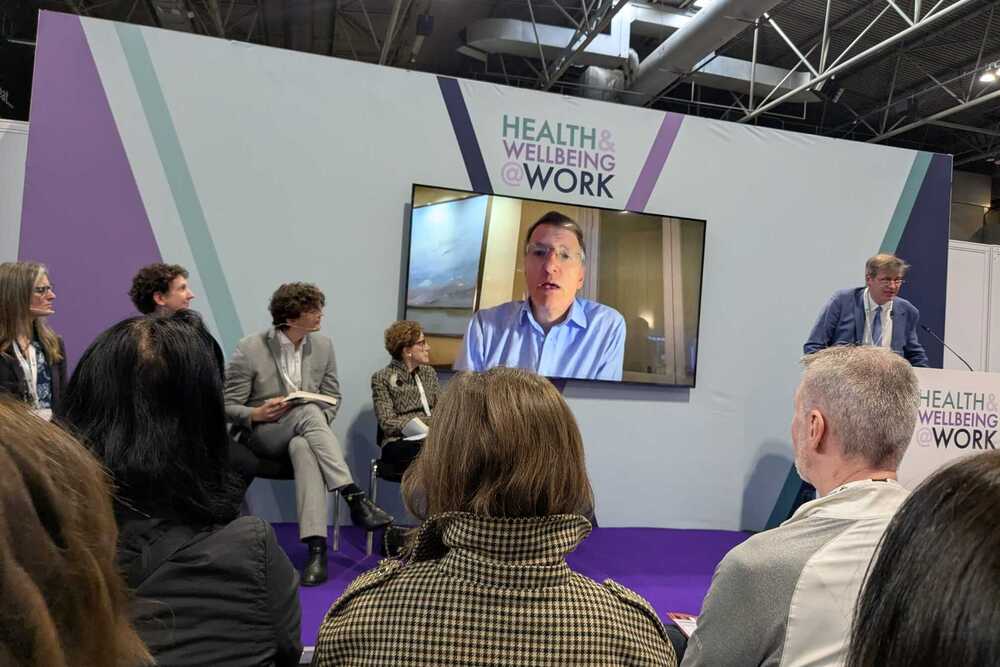
That question guided the closing fireside keynote I had the honour of chairing at the MAD World Leaders’ Summit in London with Rebecca Robins CMgr CCMI and Patrick Dunne OBE, co-authors of Five Generations at Work – trailblazers redefining leadership, belonging, and generational connection.
Their book, a finalist in this year’s Business Book Awards, captures something profound. For the first time in history, five generations are working side by side.
Why generational understanding matters now
This moment offers both opportunity and risk. Opportunity, because organisations have access to the widest range of perspectives ever seen. Risk, because assuming every generation wants the same thing leads to disconnection fast.
Rebecca and Patrick’s six-year, four-continent research shows that while differences exist, they are not fixed. They shift with context, culture, and career stage.
Their message is clear. Lead with lenses, not labels. When leaders use generational lenses, by understanding life stage, motivation, and trust, they see strengths that might otherwise stay hidden. And those strengths matter. Research highlighted in the book shows that when trust flows across generations, innovation and retention rise together, because experience and curiosity meet in the same room.
Change isn’t coming. It’s here and constant. Technology, hybrid working, and demographic shifts are reshaping how we connect. Yet what keeps people motivated remains timeless: empathy, inclusion, and integrity.
Leaders today face competing pressures, to deliver results quickly while supporting teams with very different needs and expectations. The most effective leaders aren’t managing age; they’re cultivating connection.
The demographic shift is real:
- One in three UK employees are now aged over 50 – the highest proportion on record (Source: Ageing Better)
This demands a rethink of how we design learning, leadership, and communication, so every generation can contribute fully.
Insights from global case studies
The research behind Five Generations at Work showcases how global organisations are learning to build connection across generations through shared purpose and trust.
- EY Foundation: Brings employers and young people together through real-world experience and collaboration, helping opportunity reach across both social and generational lines. The EY Foundation Impact Report 2023–24 found that 92% of participants said the programme improved their career prospects, and 85% said it helped them decide their next step. Clear proof of how focused support can build confidence, clarity, and direction early in a person’s career journey.
- LVMH: Encourages creativity and curiosity across age groups by linking emerging talent with experienced leaders through a cross-generational innovation network. This approach strengthens belonging and keeps ideas flowing across brands, markets, and generations.
- BMW Group: Hardwires age diversity into its production system by redesigning workplaces and processes to support employees at every life stage. Through ergonomic innovations and retiree re-engagement programmes, BMW enabled older and younger employees to collaborate effectively, improving productivity and transferring knowledge across generations. This model shows how inclusion can drive both trust and measurable performance.
Together, these examples illustrate the same truth. When leaders invest in understanding across generations, trust becomes the driver of adaptability, innovation, and performance.
From labels to lenses
Generational difference isn’t about capability. It’s about how people see and feel differently as well as how they prefer to receive, process, and respond to information. Inside organisations, leaders are often given playbooks full of what to say, but often it’s missed how people actually hear it.
Different generations. Different experiences. Different motivators.
When leaders listen and tailor communication to what matters most, messages land with clarity and trust. The gap isn’t effort, it’s alignment. Because trust grows when people feel you’ve spoken to them, not at them. That’s how we bridge generations and turn communication into connection.
Leading through listening
I’ve learned that leadership isn’t built in calm waters. It’s revealed in how we show up when the tide turns. That’s when empathy, integrity, and courage matter most. Communication works best when it evolves with the people we’re connecting to.
Leadership takeaways: Practical actions
- Embed generational understanding: Make it part of leadership development, not a diversity add-on.
- Know your data: Use workforce insights to see how life stage, not just age, influences trust and motivation.
- Model shared leadership: Create space for collaboration and curiosity across age groups.
- Strengthen communication: Adapt tone, timing, and channels to meet people where they are.
- Create connection points: Build mixed-age project teams and dialogue sessions where experience meets fresh perspective.
The L-Model: Leading across generations
Developed from my work on culture and multi-generational teams, the L-Model offers four behaviours leaders can apply to strengthen connection and trust across generations:
- Listen: Seek context before assumption
- Learn: Use data and dialogue
- Link: Connect shared goals across ages
- Lead: Act with empathy and accountability
Looking ahead
As we live and work longer, careers are no longer ladders – they’re lattices. People move through roles, priorities, and life stages. The challenge for leaders isn’t to manage five generations – it’s to unite them. This is much easier to do with a maximising mindset.
Five Generations at Work confirms when leaders listen through lenses, not labels, they find hidden strength. When they communicate with understanding, they build trust. And when they invest in one generation, they lift all five.
The future of leadership isn’t defined by age. It’s defined by awareness, empathy, and adaptability.
Five Generations at Work is available from Amazon and all major booksellers
About the author

Maria James is a Culture and Trust Strategist and keynote speaker who helps organisations turn culture into competitive advantage, earning trust, protecting it under pressure, and rebuilding it when it breaks.
Her leadership philosophy is grounded in lived experience, shaped on the frontline in the Army, leading a national police training programme in Iraq, and scaled in corporate life, driving significant culture transformation programmes across industries from professional services to finance.
A CIPD Learning & Development accredited practitioner, she’s shaped firmwide culture plans reaching 27,000 employees and designed digital tools that made inclusion and recognition visible. She believes trust and psychological safety are inseparable foundations for belonging and high performance.
Reference Links
Five Generations at Work – Amazon book link
Centre for Ageing Better – One in three workers in the UK is aged 50 or over