A TikTok video from GetCareers recently went viral, amassing more than 8.5 million views, for its playful comparison of Millennial and Gen Z workspaces. In the clip, Millennials sit beneath bright overhead lights, while Gen Z work in low-lit, cosy corners – a style jokingly dubbed “hoa hoa hoa lighting.”
@getcareers Millennials: ? GenZ: #millennial #genz #worklife #humor #office
♬ Originalton – net.D
It’s funny and exaggerated, but it resonated widely because it captures a real shift in what different generations expect from the workplace.
For HR and wellbeing leaders, this trend is more than internet humour: it’s a window into how workplace design is evolving – and why these details matter for performance, health, and employee experience.
A tale of two generations
Millennials entered the workforce in an era defined by fixed corporate design standards – identical desks, fluorescent lighting, and a focus on standardisation. They learned to adapt to environments that were rarely tailored to employee comfort.
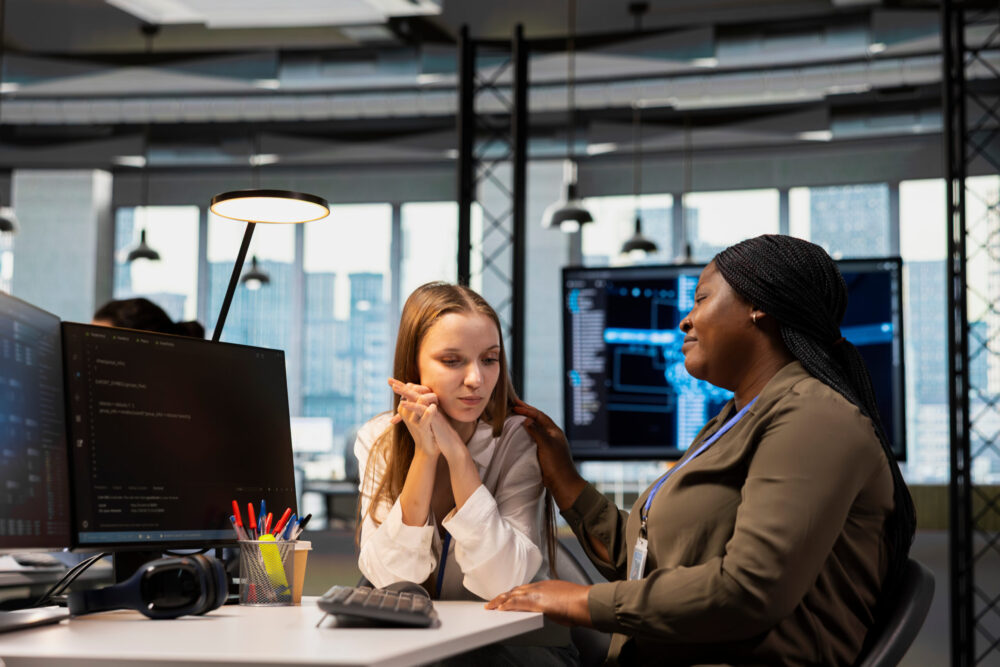
Gen Z, however, brings different expectations shaped by digital personalisation, flexible work, and greater openness about mental health. They value autonomy, sensory comfort, and environments that feel more like well-designed social spaces than corporate floors.
Research backs this shift:
- 75% of Gen Z employees say a comfortable, supportive workspace influences their decision to stay with an employer (BCG, 2024).
- Over 60% of employees – across generations – say physical environment impacts their ability to do their best work (Leesman Index, 2023).
- Workplace design ranks among the top five factors influencing employee engagement (Steelcase Global Report, 2023).
Lighting is just one element – but it’s become a shorthand for the broader generational desire for workplaces that feel calmer, more human, and more supportive.
Lighting: a health and wellbeing issue hiding in plain sight
While the TikTok trend highlights ambience, the science behind lighting is clear and long established.
Ben Wright, Global Head of Partnerships at Instant Offices, emphasises the health risk side:
“Improper lighting can lead to eye strain, headaches, fatigue, and poor concentration over time.”
And employees are noticing. The American Society of Interior Design reports that 68% of employees are dissatisfied with their workplace lighting.
Other data points underscore how significant this is:
- Poor lighting has been linked to reduced cognitive performance, particularly tasks requiring sustained attention (Journal of Environmental Psychology, 2022).
- A well-lit environment can improve mood by up to 20% (Lighting Research & Technology Review, 2021).
- Access to natural light is one of the most desired workplace features, with 78% of employees saying it improves wellbeing and 70% saying it improves work performance (Future Workplace Study).
In other words, lighting is a sometimes an overlooked foundation of employee health, safety, and productivity.
AI visualisation underscores the impact
To further explore the issue, Instant Offices used AI — via ChatGPT — to generate an image based on the common symptoms of working in poorly lit environments: dark, tired eyes, slumped posture, and visible signs of tension and fatigue.
While stylised, the visual reinforces the message: environmental stressors accumulate and directly influence how people feel and function.
The real takeaway for HR and Wellbeing leaders
The “hoa hoa hoa” trend is more than a generational joke – it’s a reminder that employee experience is multi-sensory. Culture, policies, and programmes matter, but so do lighting, noise levels, ergonomics, and layout.
Three key insights stand out:
1. Generational expectations are diverging – but personalisation benefits everyone.
Younger employees may be vocal about ambience, but flexibility in lighting and workspace design supports all demographics. The key is to understand preferences and build these in whenever possible. A short pulse survey or team discussion could reveal easy wins
2. Work environment directly influences health and wellbeing.
Lighting affects stress levels, eye health, sleep cycles, and concentration – all core drivers of health, wellbeing and productivity too.
3. Quick, low-cost improvements can have meaningful impact.
Even before redesigns or workspace changes, employers can act. Task or accent lighting can be introduced. Natural light exposure can be maximised, screen contrast and glare can be reduced and movement breaks can be promoted to reduce eye strain.
A light-hearted trend with serious implications
The viral “hoa hoa hoa” video may have sparked laughter, but it highlights an important truth: physical workspace design deeply shapes employee wellbeing, engagement, and performance.
For HR and wellbeing leads, it’s a powerful reminder that wellbeing strategy isn’t only about benefits and programmes – it’s also about creating environments where people can do their best work and feel good while doing it.
References:
You might also like: