We hold everything together, all day, all week.
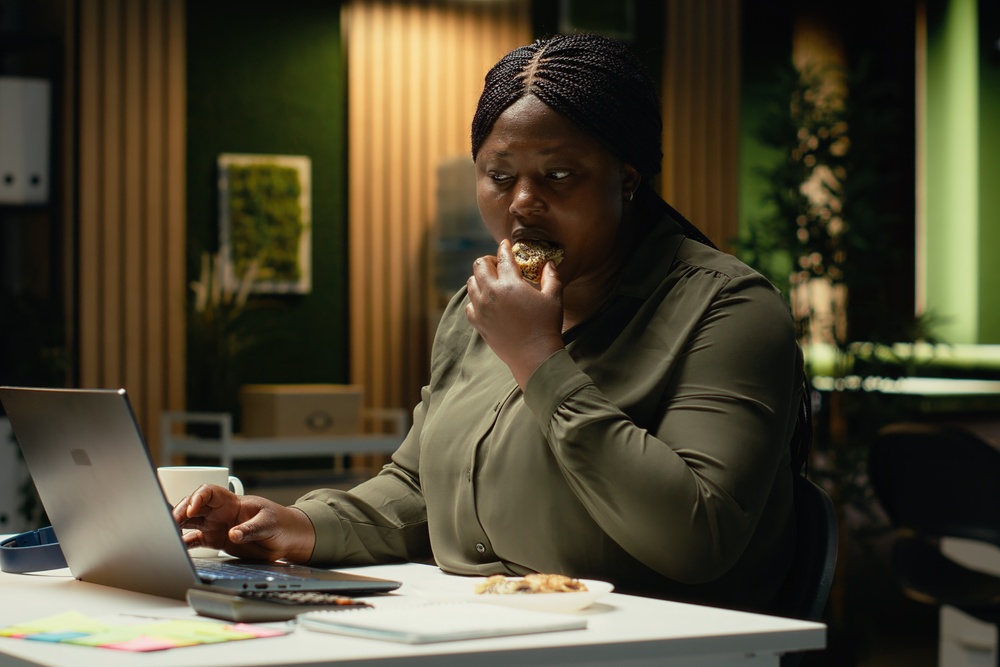
Meetings, deep work, deadlines. A rushed lunch. Fighting the afternoon energy dip. Gym tonight? We try to stick to it. Then the commute.
By the time we get home and the door finally closes, food moves to the bare survival part of our brain. But something else is there too, a different feeling: By that point it’s as if your self-control clocked off the minute you stepped off the tube train home.
That’s how stress eating differs from ordinary hunger.
We can feel almost frantic! for something sweet, salty, crunchy, anything that gives an immediate hit of relief. Dinner might be 20 minutes away, and we’re roaming the cupboard. Then once you start, it’s near impossible to stop.
This craving represents the day you’ve just had, mixed and materialised: Part hunger, part exhaustion, part reward, part finally being allowed to switch out of work mode.
The problem probably starts around lunchtime
For most of us, the 8 pm stress eating pattern starts hours earlier.
What happened earlier in the day?
A packed calendar turns your lunch to half a sandwich and two caramel chocolates left over from Janet’s birthday. After that, stress blunts your appetite for the rest of the afternoon because the deadline is the end of day today.
Or you’re stuck between meetings with no time left to eat your protein bowl, a situation made even more annoying by the fact you meal-prepped this lunch for yourself yesterday.
Or you might subconsciously keep food light during the day. You have a dinner thing later, so you’re saving calories for that.
Then, the combo of a survival-like hunger, and the craving for anything that feels like an actual meal, catches up with you at exactly the same time as the moment your mental energy runs out.
You’re not alone in this:
This study, following employees through days of higher and lower workload, found high workload days linked to higher sugar, calorie, and saturated fat intake. This effect was especially apparent in people already practicing dietary restraint.
In this analysis of 23,488 adults, skipping lunch was associated with eating more, and a tendency to overeat at dinner. Skipping both breakfast and lunch pushed dinner intake even higher.
When stress turns up the volume
Stress affects people differently. Some people lose their appetite completely. Some people lose their appetite during the day, then overeat in the evening. Some people snack all day without noticing.
For people prone to stress eating, the relationship can be very immediate.
This 49-day study in women found high-volume eating rose on days when they experienced more stress than usual. Daily stress showed a stronger relationship with emotional eating than overall life stress.
In more research into high-intensity workplaces, office workers described work stress alongside stronger craving for sweet, rich or junk foods, plus consuming larger portions.
A difficult day can lead to specific cravings feeling extra persuasive and insatiable.
When food becomes the “work is over” button
Here’s the last layer:
After a few hard days, food connects itself to the moment your brain registers work is finished. It’s now part of a wind-down ritual, shoes off, get comfy, food.
Which in itself is fine. The problem starts when we overdo it and don’t know how to stop.
The practical fix needs to reach all sides of the pattern. The hunger building through the day, the evening ritual wrapped around it, the feeling of reward.
Start much earlier than 8 pm
Protect your lunch hour. Make an appointment with yourself. No matter how demanding the day, you need and deserve this fuel and reset break.
Take the full hour. Yes, 60 minutes! Step away from the screen, sit somewhere else and eat your lunch.
Your brain gets a genuine pause from decisions, emails and task switching, and this reset can leave you with more mental energy in the afternoon.
To enhance this effect, take a short walk after lunch (not before), as this helps blunt the rise in blood glucose after eating, especially when you walk soon after the meal.
If lunchtime regularly gets squeezed, make tomorrow’s lunch easier tonight. Keep up with the meal prep. If a situation is pressing you to cancel lunch, reduce it to 30 minutes, but keep the appointment.
If you don’t meal prep, make sure you walk to lunch, eat anywhere other than the office, and walk back choosing the longer route.
Plan a 4 pm bridge
A proper afternoon snack takes the edge off the post-commute survival hunger well before it becomes too urgent.
Healthy afternoon snack ideas effective for this:
- 1 whole fruit + mixed nuts, nut butter, or eat it with a nutty protein bar,
- 1 small piece of sourdough bread + tomato + avocado,
- 1 small pot of unsweetened yoghurt + banana + almond butter.
This formula is useful on gym days. You get a healthy energy kick of natural sugar and fibre, and some healthy fat to make it last longer.
Create a new “work is over” cue
When you get home, give your brain another reliable route into evening mode.
Put dinner on, but do something else while it’s cooking.
You could write down any leftover anxiety you have from the day, including unsolved problems, to physically file them away for another day.
In a series of experiments, making specific plans for unfinished goals and open thought loops reduced intrusive thoughts and freed up cognitive resources, giving the brain permission to park the problem somewhere safe until later.
This ritual creates a clean line between work and the rest of the evening.
Make specific food decisions
Decide what happens when you get home while you’re still at work, or on your journey back.
Like: This meal for dinner when I get in. If I want something sweet after, I’m having chocolate and mint tea.
This study found pre-committing to a food choice helped people make healthier choices under acute stress. Another randomised study found linking a known stressful situation with a specific eating plan reduced stress induced high-calorie snacking.
You’re basically making the decision while your brain still has some battery left.
Dinner should be substantial enough to deal with hunger and give you complete nutrition without spiking your glucose levels before bed.
Use this plate formula:
Protein anchor + slow carb + filling fibre + healthy fat + a kick of flavour + small planned indulgence.
In this review, higher protein meals increased satiety and lowered ghrelin (hunger-signalling hormone).
Slow carbs: Cravings often get worse when a meal is too light.
Fibre can help lower cravings as it slows digestion and increases satiety.
Healthy fat aids nutrient absorption and staying power. In this study, almonds increased fullness and reduced later cravings.
Your small planned indulgence: Deprivation is not the key. So pick your favourite to close the meal off with, and give your craving a planned portion. This will help you not to take the entire packet to the sofa later.
The goal is to arrive at the end of dinner feeling fed, calmer, and back in charge of your next choice.
About the author:
Martina Gabriela writes Plant Nutrition Edit, an evidence-led nutrition publication translating human research into practical ways to make healthy, plant-rich eating work in real life. Read more at: https://www.plantbasededit.com/
You might also like: