Research from MHFA England, published ahead of My Whole Self Day on Tuesday 10 March 2026, reveals that 45% of UK employees feel unable to raise mistakes or risks at work. This silence is not just damaging for individuals, but costly for organisations too – affecting productivity, quality, and the risk of preventable errors.
The research, conducted with 2,000 working adults across the UK, highlights the scale of the challenge:
- 49% don’t feel comfortable expressing their needs at work
- 35% don’t feel safe asking for help
- 15% say they have made preventable mistakes because they felt unsafe speaking up
These findings highlight the critical role psychological safety plays in workplace performance.
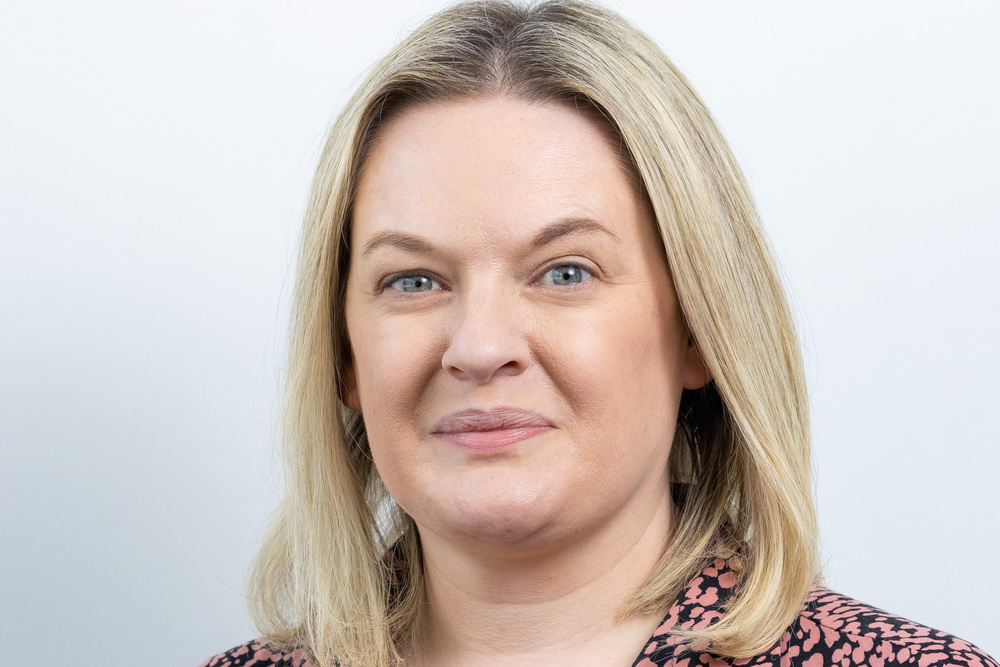
Here, Sarah McIntosh, Chief Executive of MHFA England — the organisation behind Mental Health First Aid training in England and the Association of Mental Health First Aiders — explains why psychological safety at work matters more than ever, and how employers can create real impact: boosting wellbeing, enhancing performance, supporting better decisions, and helping teams thrive under pressure.
Productivity is rarely associated with silence at work. We may focus on skills gaps, systems, and engagement, or assume workload is the issue. But in many organisations, people choosing not to speak up is one of the biggest drags on performance.
At MHFA England®, in our work with employers across the UK, we see it time and time again. Teams that look capable and committed on paper, but where problems aren’t being raised, questions go unasked, and risks are quietly worked around instead of tackled. And this isn’t because people don’t care. It’s simply that they don’t feel safe enough to say something.
What many organisations don’t realise is that silence in the workplace has a very real cost, and it’s one many organisations can’t afford.
Psychological safety isn’t about being “nice”
Psychological safety is a concept that is often misunderstood. It’s sometimes dismissed as soft. In reality, psychological safety is essential to productivity as well as wellbeing. It’s about whether individuals are safe to speak up at work, to point out problems, question decisions, seek help, or to share ideas without fear of embarrassment or negative repercussions.
In the absence of psychological safety, problems tend to be hidden until they turn into failure. On the other hand, teams learn faster and work better together when it’s present. Years of research, including large-scale organisational studies, confirm the same pattern. High-performing teams aren’t those without problems, but those where problems surface early.
What silence is really costing organisations
At MHFA England, our new research reveals just how widespread workplace silence has become. Almost half of employees in the UK report that they don’t feel safe speaking up when they identify mistakes or risks. One in three say they don’t feel safe asking for help when they need it.
These figures shouldn’t be taken as a criticism of employers. Most of the leaders I meet are trying to do the right thing. But the statistics do point to a growing gap between intention and experience. This has serious implications.
Mistakes aren’t caught early when people stay silent. Stress builds. Risks grow. Workarounds become a substitute for solutions. In our research, nearly one in seven employees said they had made more mistakes at work because of stress or lack of clarity that hadn’t been addressed. This affects quality, safety, and retention over time.
At a national level, this has implications for productivity. At an organisational level, it manifests itself in teams that never seem to reach their full potential.
Fortunately, improving psychological safety doesn’t have to mean expensive or even radical changes. By focusing on ensuring everyone is seen, heard, and valued, we can shift cultures.
The pressure people are working under has changed
Lots of workplaces are operating under sustained pressure, with tighter margins and growing demands. In this kind of environment, psychological safety can slip away quietly. There is a tendency for silence to creep in as people weigh the personal risk of speaking up.
Managers make the difference
If culture can be shaped anywhere, it’s in the relationship between managers and their teams. Managers can help create an environment where employees feel heard and supported and can speak up without fear of judgement.
This matters, because many employees still don’t feel able to say what they need in order to do their job well. Almost half of them do not feel comfortable expressing their needs at work.
The most effective organisations are not those whose managers have all the answers, they are those whose managers can say with confidence, “Let’s talk about this,” and whose teams know they will be met with curiosity rather than defensiveness.
What My Whole Self has taught us
Through leading the My Whole Self campaign, we’ve seen how closely linked psychological safety, inclusion, productivity, and performance are. If you feel like you have to hide some part of yourself, work takes more effort.
Our research shows that if you feel like you can’t bring your whole self to work, you’re much more likely to report that you’re not as productive. Not only because authenticity is a moral imperative, but because you perform better when you’re not spending energy trying to edit yourself.
My Whole Self was never intended as a single day of activity. We created it to help organisations to reflect on the culture they’re creating throughout the year, particularly whether they’re creating a safe enough environment for people to contribute fully.
As My Whole Self Day approaches on 10 March, many leaders are asking how they can improve performance in uncertain times. One place to start is by asking a simpler question: do people here feel able to speak honestly about what’s getting in the way of good work?
An invitation, not a warning
Psychological safety can be built. It grows through small, everyday behaviours. The way in which meetings are conducted, how errors are dealt with, and how a leader or manager responds to someone expressing a concern. Small changes can make a big difference to whether people choose to speak up next time.
Organisations that create psychologically safe environments don’t just see improvements in wellbeing. They see improved performance, better decision-making, and teams that are more resilient when under pressure.
Silence in the workplace is rarely a sign that all is well. It is more likely an indication that people are waiting for an invitation to speak.
It is the leaders who create that invitation who unlock growth and potential, not just voices.
About the author
Sarah McIntosh is Chief Executive of MHFA England, the social enterprise responsible for Mental Health First Aid training in England and the Association of Mental Health First Aiders.
Her career is grounded in HR, wellbeing, and organisational culture, with experience across social enterprises and membership organisations to support employers to build mentally healthy, high-performing workplaces. She is also a Non-Executive Director at Social Enterprise UK.
Learn more at mhfaengland.org or follow Sarah on LinkedIn.
You might also like: