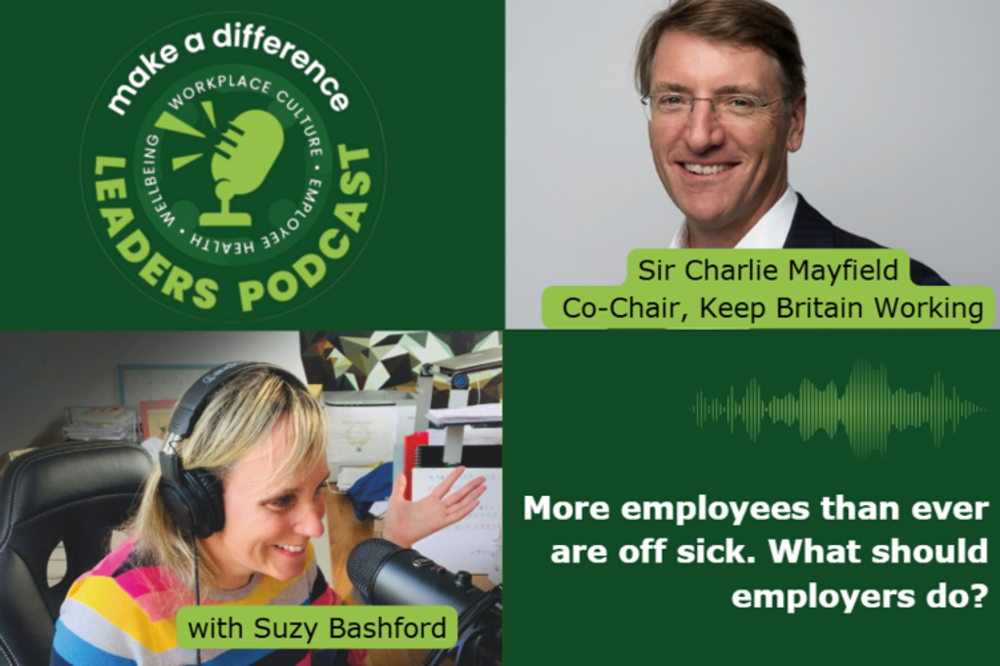

The Keep Britain Working team, led by Sir Charlie Mayfield, in its latest update – Keep Britain Working – the story so far (published on 3rd July) – talked about being “struck” by the “quality of insight”, “shared ambition” and “enthusiasm” they’d seen from the nearly 200 “vanguards”; the employers trialing and refining proposed workplace wellbeing approaches.
But what do vanguards themselves think of the process so far, and the likelihood that the Keep Britain Working recommendations are actually taken seriously?
We spoke to two of the Vanguard employers about their experiences of the programme and whether they believe it will have a lasting impact. One preferred to remain anonymous, while the other was happy to be quoted.
Keep Britain Working is backed by several departments
Even if there’s a new government, the Vanguard who preferred to remain anonymous “doesn’t see Keep Britain Working going away because these workplace challenges will continue to exist, and any government will need to do something about them”.
The Vanguard believes that the fact that Keep Britain Working has the backing of three different government departments (the Treasury, the Department of Health and the Department for Work and Pensions) means it will be able to weather any political storms. This will give it “some protection” against ending up in the “long grass” like so many government reviews before it.
The spokesperson adds:
“We’re very hopeful that it will last. There’s lots of business interest, as well as interest from the unions and the NHS. But obviously it’s politics. So who knows?”
Government is efficient and proactive
The anonymous Vanguard has also been impressed by the government’s proactivity. The Keep Britain Working team has been freely available and efficient:
“It’s been really interesting having so much face time with government. Despite the number of Vanguards they have, they’ve been quick to organise meetings and workshops and been really engaged.”
Senior professionals, who’ve attended the meetings and workshops on behalf of the Vanguard, have reported back that they’re high level “inspiring, passionate and interesting”.
The way that the Keep Britain Working Team is running the vanguard pilot to gather and test ideas is via a series of “sprints”. These are smaller groups of employers which hone in on a specific issue over eight weeks to quickly test, scale and feedback on practical workplace solutions. The ultimate goal is to develop a Healthy Working Lifecycle voluntary standard.
What is a ‘sprint’?
The four workstreams that the sprints are focusing on are:
Prevention
Stay in work
Return to work
Performance data
The anonymous Vanguard has been involved in several of the sprints with its senior personnel. According to the spokesperson, these sprints have helped them realise “how much of a shared interest there is on this topic, regardless of what sector you work in or what type of business you are; everyone is on the same page, which is very rare in these times”.
Vanguard enthusiasm good sign for the industry
As the spokesperson says, even the sheer amount of Vanguards wanting to be involved reflects the interest in the topic of workplace wellbeing.
After a sprint, there are sessions when employers give feedback before a second sprint on the topic takes place, integrating these learnings.
“The team is really doing its homework in terms of speaking to everyone involved and making sure everyone is on board with the recommendations,” says the anonymous Vanguard. “Obviously, we all really want to make sure that whatever solutions are proposed are actually workable.”
Avoiding rigidity
“Engagement exercises” with health providers have also taken place, where the government asks their perspective on what is realistically achievable from a real-world, delivery perspective.
One of the insights published in the government’s recent update – The Story So Far – is that any standard set must “avoid being overly prescriptive”.
“To be accessible across the diversity of UK employers, it must focus on outcomes and a small number of core fundamentals”, it says.
The spokesperson says that this was one of the strongest areas of agreement between vanguards:
“Everyone agrees that one size doesn’t fit all. What might work for a big corporate won’t work for a small or medium sized business, and vice versa. The challenge is: how do you get something that works for all different sizes of business? The answer is you’ve got to be flexible and market-driven.”
Raising employee awareness
Another key theme in the government’s recent update is that fact it wants the independent sector to take the initiative. “That exists in sorts at the moment with different health providers picking up on different areas. But the government really wants to maximise the opportunities offered by digital healthcare,” says the anonymous spokesperson.
One of aims of this work is that, ultimately, employees will be much more aware of the health provision that their company offers and make use of it. Currently there’s much research which shows awareness around health and protection at work is quite low.
Momentum to action
One particular area which many health providers hope the work addresses is incentivising and inspiring small and medium sized businesses to see protecting their workforce’s health as valuable and business-critical. Some are calling for government incentives to help on this front.
Phillippa O’Connor, Chief People Officer at PwC has been involved in the ‘stay in work’ sprint and agrees “it’s great to see the momentum of more employees taking action”. For her, one of the most crucial topics of conversation was how “the success of stay in work plans depend on shared responsibility between employers and employees working together”.
But, as she says, the challenge after all this discussion is – as it is for every sprint – “turning that insight into consistent practice across UK workplaces, by scaling what works and creating the right conditions for open conversations about health and wellbeing.”
You can view the full “Keep Britain Working – the story so far” report here.
You might also like: