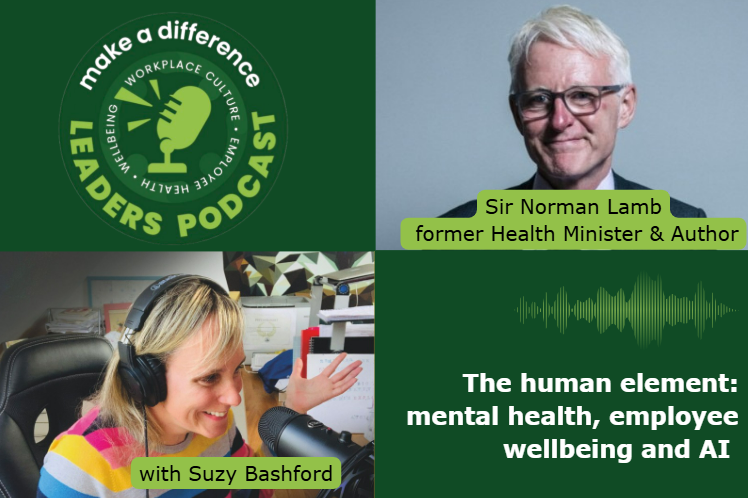
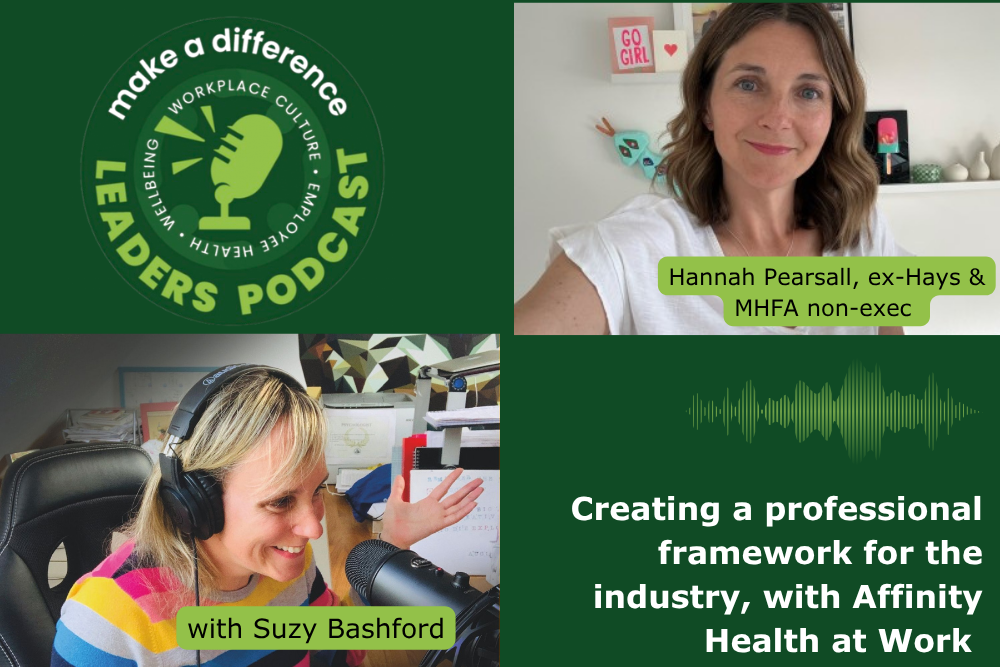
This is a question we’ve been asked numerous times at Make A Difference Media and is the topic up for discussion in the latest MAD Leaders Podcast.
In this episode we discuss why Workplace Wellbeing can still lack credibility in 2026 and what can be done about this challenge. Our experts this week are Hannah Pearsall, recent Head of Diversity, Inclusion and Wellbeing at recruitment giant Hays, and Claire Agate, Senior Consultant and Occupational Psychologist at Affinity Health at Work.
You can listen to the episode by clicking the Spotify link below, or accessing it wherever you find your podcasts
Pearsall has completed the University of Nottingham’s MSc in Workplace Health and Wellbeing (graduating top in her year, no less!) and has been involved in Affinity’s research into creating a professional framework for the industry.
The conversation covers a raft of topics such as the lack of clear career pathways, the problem of language and lived experience as a common career entry point.
Lack of clarity
Pearsall explains why the lack of clarity around a definition of wellbeing is so damaging to the industry’s credibility and why this must be addressed alongside creating a recognised framework.
She says:
“There is still a massive amount of tension between the perception of what Workplace Wellbeing is and achieving and sustaining high performance. There are a lot of organisations that believe that if they dial up wellbeing, then that is not going to result in performance improvement or sustaining high performance. An education piece required on what workplace wellbeing actually is.”
Claire makes clear that she believes it’s down to the industry to proactively lead this education piece rather than waiting for other functions to recognise the value of employee health and wellbeing. She says:
“People are saying ‘We don’t seem to have the senior level buy-in that we need’. What I’ve realised, in the process of doing the research and running this project, is that actually we have to create that credibility ourselves. We can’t wait for a senior stakeholder ‘actually, I’ve got it’.”
Evidence-based practice is essential
Both the lack of an agreed role definition leads to inconsistent seniority, varied responsibilities and reliance on lived experience without sufficient evidence-based practice or self-protection from triggering work.
Hannah describes what she has gained through an MSc in workplace health, such as strengthening critical analysis, context-led strategy and impact measurement.
Claire goes into detail about Affinity’s year-long research consortium project that produced an evidence-based competency framework with three pillars: professional factors, wellbeing knowledge, and wellbeing practice, including measuring impact.
Both also stress the need to tailor the business case to stakeholders, using external benchmarks and tender requirements, and prioritising job design and manager capability as key wellbeing investments.
Time stamp of conversation
00:00 Welcome and Leaders Club
00:44 The Credibility Challenge
01:57 Why Roles Lack Definition
04:53 Qualifications Build Gravitas
07:23 Building a Professional Framework
09:46 Framework Pillars Explained
11:38 Proving Impact With Data
15:01 Future of the Profession
19:07 Educating Leaders and Government
24:05 Getting Boardroom Buy In
27:22 Alien Pitch Job Design
29:37 Wrap Up and Subscribe
You might also like: