Few employers would argue that today’s workplace feels more uncertain than it did five years ago.
Economic pressures, geopolitical instability, rapid advances in AI, organisational restructuring and shifting workforce expectations have all combined to create an environment of almost constant change. At the same time, employees are carrying increasingly complex responsibilities outside work, from supporting ageing parents to navigating children’s mental health challenges and caring for family members with additional needs.
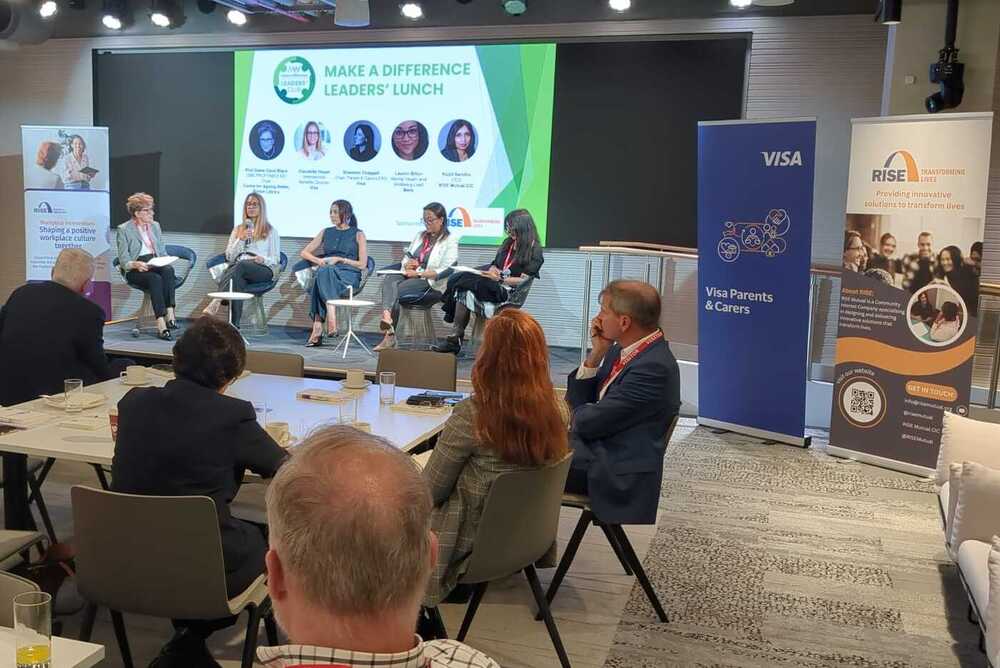
Against that backdrop, the latest Make a Difference Leaders’ Lunch, hosted by Visa in central London and chaired by Dame Carol Black, could hardly have been more timely.
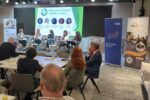
Bringing together senior leaders responsible for workplace culture, employee health and wellbeing, benefits, employee experience, HR and transformation from organisations spanning legal, financial services, technology, retail, hospitality, construction, local government, the NHS and the third sector, the discussion set out to explore how employers can better support colleagues through change and uncertainty, with a particular focus on parents and carers.
But as the conversation unfolded, it became clear that the subject was much bigger than one employee group.
Instead, it evolved into a rich discussion about what resilient organisations look like when employees are navigating increasingly complicated lives – and what employers need to do differently if they want people to remain healthy, engaged and productive.
Why supporting parents and carers has become a strategic business issue
Opening the session, Dame Carol Black reflected on just how much the conversation has changed in recent years.
When she led earlier government reviews into health and work, issues such as neurodiversity, children’s mental health and the growing number of young people not in education, employment or training (NEET) barely featured. Today, they are impossible to ignore.
That observation resonated strongly around the room.
With the independent Milburn Review examining the rise in youth economic inactivity, new Employment Rights reforms strengthening support for parents and carers, and growing evidence linking family pressures to employee wellbeing and productivity, attendees agreed that organisations can no longer separate workplace wellbeing from the wider realities employees face beyond the office.
Culture matters more than the benefits themselves
One of the strongest messages from the opening panel was that while benefits remain important, they are rarely what employees value most.
Instead, it is culture that determines whether people actually feel able to use the support available.
One panel member shared how they approach employee wellbeing through four interconnected areas:
- access to practical support and resources
- flexibility when employees need time away from work
- education and awareness about available support
- employee communities that provide connection, feedback and lived experience.
Importantly, these communities do far more than offer peer support. They actively shape future policies by giving leaders direct insight into employees’ changing needs.
As one panellist put it, different people need different types of support at different stages of life. The most effective organisations continually listen and adapt rather than assuming yesterday’s solution will still work tomorrow.
From global strategy to local reality
Another recurring theme was the importance of balancing consistency with flexibility.
Large international organisations inevitably need global wellbeing frameworks, but those frameworks must still allow for local cultural differences, legal requirements and societal expectations.
Panel members shared examples of adapting support for employees working across regions experiencing conflict and political instability, recognising that wellbeing support often needs to extend beyond employees themselves to the wider family unit.
One speaker described facing a workforce experiencing what they called “cumulative change” – the lingering effects of the pandemic, geopolitical uncertainty, restructuring, AI-driven transformation and continuous organisational change.
Rather than treating these pressures as isolated events, the organisation has developed practical resources to help employees navigate world events, expanded access to mental health support for employees’ children (aged six and over) and introduced training to help managers have more emotionally intelligent conversations during periods of uncertainty.
One particularly powerful observation was that today’s workforce is not necessarily struggling because of one major event. Many people are simply exhausted by the relentless accumulation of change.
People don’t experience work and life in separate compartments.
A point made by Kuljit Sandhu CEO of the event sponsor RISE Mutual CIC, which should matter to every leader managing change, is that people don’t experience work and life in separate compartments.
Organisational change isn’t only about structures, timelines and communication plans. It’s about how people feel while they’re living through it, particularly those already carrying significant responsibilities outside work.
Drawing on her experience working closely with families, Kuljit reminded attendees that the principles which help families navigate uncertainty are often the same ones organisations need: trust, honest communication, connection and supportive relationships.
As one attendee reflected, these are not soft extras. They are the conditions that enable people to remain engaged, resilient and able to perform when certainty is in short supply.
Returning to work needs to become a structured transition – not simply a date in the diary
Another practical discussion centred on returners. As organisations experience continual restructuring and changing workforce expectations, delegates recognised that returning after maternity leave, extended caring responsibilities or another significant absence can feel even more daunting during periods of organisational change. Actionable solutions shared included:
- specific support for returners such as buddy schemes
- structured manager check-ins
- training managers on first week/first month conversations
- creating psychological safety for those returning after long absences
The conversation became richer when every discipline viewed the challenge through its own lens
One of the strengths of Make a Difference Leaders events is that they bring together everyone responsible for employee health and wellbeing – not purely wellbeing leads.
As delegates split into specialist roundtables, it became clear that although everyone shared the same overall objective of supporting people through change, the barriers they encountered depended entirely on the role they performed.
The discussion stopped being about theory and became a practical exchange of real-world challenges and solutions.
HR and culture leaders: Trust is becoming the biggest challenge of all
HR and culture leaders repeatedly returned to one issue: trust. Several observed that supporting employees through change has become significantly harder because trust between organisations and employees is becoming increasingly fragile. Points to keep in mind:
- return-to-office mandates create very different experiences for frontline and office workers
- senior leaders undermine culture when they don’t model behaviours themselves
- employees increasingly record meetings because they’re worried about unfair treatment
- HR shares less because they’re frightened of saying the wrong thing
- listening exercises only build trust if organisations visibly act on what they hear. Listening without action can actually increase cynicism.
Benefits leaders: Personalisation is becoming the new balancing act
Benefits leaders repeatedly returned to a dilemma many organisations are now grappling with: how do you provide increasingly personalised support for parents and carers through change and uncertainty, without undermining perceptions of fairness? As employee needs become more diverse, benefits teams recognised that offering meaningful choice is becoming essential. But they also acknowledged the challenge of deciding where an employer’s responsibility begins and ends, while ensuring support remains equitable, accessible and easy for employees to navigate.
Suggested solutions to this challenge included:
- consider offering a one-off wellbeing allowance that employees decide how to spend
- don’t over-label benefits
- language itself can determine whether people seek support. Framing initiatives around “personal time” rather than “carers’ leave” or “parent support” often removes unnecessary barriers because employees don’t always identify with those labels.
- be conscious that the neurodiversity assessment process can create anxiety
- benefits shouldn’t depend on grade or seniority
Employee networks: Visibility is harder than enthusiasm
Parent and Carer employee network leads attending the event offered a refreshingly honest perspective on the realities of running successful ERGs. While these communities are often recognised as a vital source of peer support, lived experience and organisational insight, delegates stressed that sustaining momentum is rarely straightforward. The challenge isn’t generating enthusiasm – it’s finding the capacity, visibility and cross-organisational collaboration needed to ensure networks reach the people who need them most and continue adding value throughout the employee experience. Challenges and solutions shared include:
- networks run alongside full-time jobs
- chairs need to collaborate across ERGs
- frontline workers often don’t see communications
- visibility must extend from onboarding through to offboarding
- authentic topics create engagement – not corporate campaigns
Wellbeing leaders: Great support means nothing if people never hear about it
Wellbeing leaders challenged the assumption that the biggest gap is a lack of support. Instead, they argued that many organisations already offer valuable resources, but struggle to ensure employees know they exist or understand when they might be relevant. Effective communication, they suggested, is less about sending more messages and more about reaching the right people, at the right time, through the right channels.
That becomes even more important for frontline workforces, employees experiencing information overload and those who may not yet recognise themselves as carers. Proposed solutions include:
- recognising onboarding overload and repeating communications one month later
- educating male-dominated workforces about what caring actually means to overcome misconceptions
- government tackling the current lack of national carers guidance
DE&I leaders: Don’t design support around assumptions
DE&I leaders approached the discussion through the lens of inclusion, challenging organisations to look beyond traditional assumptions about who needs support and how that support should be delivered.
They highlighted that periods of organisational change often expose existing inequalities, making it even more important to design policies, communications and support that reflect the diversity of employees’ experiences rather than relying on one-size-fits-all solutions. The discussion also reinforced that while budgets and resources may come under pressure during transformation, visible leadership, lived experience and capable managers remain some of the most powerful drivers of an inclusive culture. Challenges and solutions shared include;
- remember non-traditional parents
- data gaps after mergers can be a major obstacle
- budgets shrinking during transformation
- don’t rely on one passionate champion
- storytelling and lived experience create psychological safety
- manager capability again emerged as the common thread
Perhaps the strongest message was that when it comes to supporting parents and carers through change and uncertainty, organisations cannot assume they already know who needs support – or what that support should look like.
Supporting parents and carers may be one of the clearest indicators of organisational resilience
What began as a discussion about parents and carers ultimately became a conversation about something much bigger.
Each professional group approached the challenge from a different perspective – HR focused on trust, benefits leaders on flexibility and fairness, ERG leaders on visibility and collaboration, wellbeing leads on communication, DE&I specialists on inclusion and manager capability – but together they painted a far more complete picture of what it takes to build resilient organisations.
It highlighted that organisations which communicate openly, listen continuously, equip managers to lead with empathy and design work around the realities of modern life are often the same organisations that retain talent, build trust and navigate change most successfully.
As one participant observed, during periods of organisational transformation it is easy to become consumed by process, budgets and delivery.
The challenge is not to lose sight of the fact that, behind every restructuring programme, AI implementation or organisational change initiative, there are people trying to balance increasingly complex lives.
In an era defined by uncertainty, that may prove to be one of the most important leadership lessons of all.
Make a Difference Leaders discussions matter. They create space for those responsible for culture, health, wellbeing and employee experience to learn from one another in real time, test ideas honestly and share solutions that rarely emerge within organisational silos. You can find out more about Make a Difference Leaders and apply to join here.
A MESSAGE FROM OUR MAKE A DIFFERENCE LEADERS LUNCH SPONSOR
RISE… Shaping a positive workplace culture together
We provide evidence-based training and interventions that address and minimise the cost of a range of workplace challenges. As harm reduction and behaviour change specialists, our team is equipped to deliver training and development that sustains impact for individuals, teams, and organisations.
Our established training offers include Handling Sensitive Disclosures, Supporting Parents & Carers, Fraud Prevention & Intervention, Conflict Resolution Skills, Leadership Development for Ethical & Psychologically Safe Cultures – and more. We adopt a consultative approach, where our training solutions are developed for each client’s unique needs and then evaluated against agreed objectives to demonstrate ROI.
We are offering complimentary 60-mins diagnostic sessions where we explore a workplace challenge of your choice and offer practical insights on potential interventions and approaches. If interested, please contact clare.king@risemutual.org or julia.fernando@risemutual.org
You might also like: