
It is the night before your return to work after two months off with depression. You cannot sleep as thoughts race: Will I get up in time? Will I cry if colleagues ask how I am? Do they resent me for being away? Can I still do my job or cope with the pressure?
For many people, sickness absence due to poor mental health is difficult enough. Returning to work can be equally daunting. While work can support recovery, a poorly managed return can increase stress, damage trust and risk further absence. This matters for employees, employers and for wider society as more people fall out of work altogether due to poor mental health (Mayfield, 2026).
Where work has contributed to the absence, e.g. work-related stress, employers must consider whether psychosocial risks have been addressed. That means looking carefully at work design, working conditions such as workload and role clarity, relationships and the steps needed to prevent foreseeable harm when the employee returns.
Regardless of the reason for long-term absence, there is much that others can do to support the return. Research shows that non-health barriers— e.g. poor manager support, inflexible work arrangements, inadequate return-to-work policies—can affect whether a return is successful (e.g. Caveen et al., 2006; Nielsen & Yarker, 2024). Affinity’s IGLOO framework offers a practical way to structure support around absence management and return to work. Developed with academic partners, it recognises that a successful return does not rest solely on the Individual who has been unwell but also requires support across the Group, Leader, Organisation and Outside levels (Nielsen et al., 2018). Resources across the whole system create a protective structure around the returning employee.
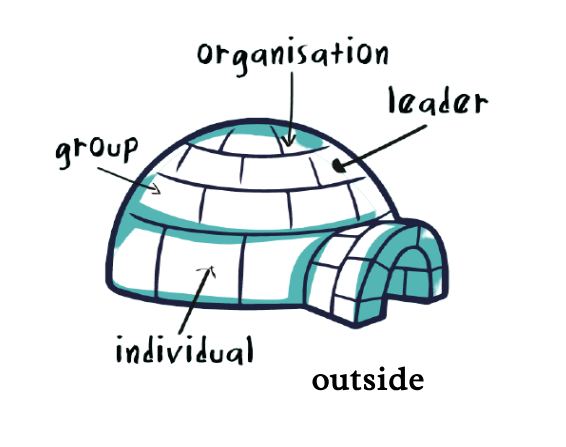
So, what might this look like in practice?
Individual: support the employee to take an active role
Employees should not be expected to manage their return alone, especially when they are still recovering. However, where they are able, they can engage in self-care and contribute valuable insight into what may help. They can keep in contact with their employer during absence, seek healthcare support, think through possible adjustments, and identifying parts of the role that may feel most difficult at first.
Once back at work, small changes can make a significant difference. For example, the employee might adjust the order of tasks, reduce avoidable distractions, or protect clearer boundaries between work and home life.
Group: involve colleagues thoughtfully
Colleagues can play an important role during both absence and return. A card, message or informal meet up can help an absent employee feel remembered rather than forgotten. Before any contact is made, however, it is important to respect the employee’s wishes around what they are happy to have shared with colleagues.
The first day back can feel particularly daunting. Having a trusted colleague meet the employee before they enter the workplace, or act as a temporary buddy during the first few weeks, can reduce anxiety and provide a simple route to practical help. This should be agreed with both parties so that support remains helpful and sustainable.
Leader: equip managers to communicate with confidence
Line managers are often central to a successful return, yet many feel anxious about saying the wrong thing. Regular, compassionate communication during absence can reduce uncertainty and help both sides prepare. Managers can also signpost employees to internal support such as occupational health (OH), employee assistance programmes (EAPs), and relevant policies.
A return-to-work conversation should ideally happen before the return date and should cover what the employee feels ready to do, what adjustments may be needed and how these will be reviewed over time. The conversation should not be a one-off; managers will need to continue to check in over the first few weeks as recovery is rarely linear. Managers should also consider the wider team and themselves to ensure that support for one employee does not unintentionally create strain for others.
Organisation: create the conditions for sustainable return
Supportive relationships matter, but they are not enough without the right organisational context. Effective return-to-work support depends on clear, compassionate absence policies; trusted OH and EAP provision; manager training; flexible working options where feasible; and work design that supports health.
Senior leaders have a particular role in shaping culture. If leaders consistently prioritise psychological health, encourage early conversations and treat adjustments as a normal part of a return from long-term sick leave, returning employees are more likely to feel safe, valued and able to contribute.
Outside: connect with wider sources of support
Workplace support should sit alongside appropriate external support. Healthcare professionals, family, friends, community services and specialist advisers may all form part of the return-to-work picture.
The value of IGLOO is that it makes shared responsibility visible. It helps organisations move beyond a tick-box return-to-work process to really understand what needs to be in place, at each level, for people to return and stay well in work.
At Affinity, we offer online toolkits for employees on long-term sick leave and their managers to help them navigate the return to work journey, with checklists, exercises, communication prompts and return-to-work conversation guides. These have been trialled in NIHR-funded research (Davis et al., 2024) and used with our clients. We also offer bespoke training for line managers on effective absence management and a wider Absence Management Review service to an organisation’s policies, procedures and provisions are joined up, compassionate and effective.
The key takeaway is simple: sustainable return to work does not depend on one person alone. When individuals, colleagues, managers, organisations and outside resources work together, return to work can become less daunting, more human and more likely to last. To explore how Affinity could strengthen your organisation’s approach, please visit our website https://www.affinityhealthatwork.com/ or get in touch by emailing hello@affinityhealthatwork.com.
About the author:

Alice Sinclair is a Senior Consultant at Affinity Health at Work. She works on a range of large, government-funded research and evaluation projects focused on health at work, as well as smaller studies with public and private-sector clients. Alice is driven by the desire to ensure that robust, accessible evidence is available to help employers and individuals make informed decisions about how to collaborate and create healthier, more productive work environments.
References
Mayfield, C. (2026). Keep Britain Working: Final report. Department for Work and Pensions. https://www.gov.uk/government/publications/keep-britain-working-review-final-report/keep-britain-working-final-report
Caveen, M., Dewa, C., & Goering, P. (2006). The influence of organisational factors on return-to-work outcomes. Canadian Journal of Community Mental Health, 25(1), 121–142. https://doi.org/10.7870/cjcmh-2006-0017
Nielsen, K., & Yarker, J. (2024). Thrivers, survivors or exiteers: A longitudinal, interpretative phenomenological analysis of the post-return-to-work journeys for workers with common mental disorders. Applied Psychology: An International Review, 73(1), 267–295. https://doi.org/10.1111/apps.12479
Nielsen, K., Yarker, J., Munir, F., & Bültmann, U. (2018). IGLOO: An integrated framework for sustainable return to work in workers with common mental disorders. Work & Stress, 32(4), 400–417. https://doi.org/10.1080/02678373.2018.1438536
Davis, O., Dawson, J., Degerdon, L., et al. (2024). Protocol for a pilot cluster randomised controlled trial of a multicomponent sustainable return to work IGLOO intervention. Pilot and Feasibility Studies, 10, Article 23. https://doi.org/10.1186/s40814-023-01439-3
You might also like: