
The £1.45m Goldman Sachs tribunal award is a powerful reminder that men’s health at work isn’t just about benefits and wellbeing programmes. It’s also about whether men feel able to be fathers without compromising their careers.
What does your organisation really tell men about fatherhood?
The answer may not be found in your parental leave policy. It may be found in what happens when a man actually uses it.
That question is at the heart of a recent employment tribunal case involving Goldman Sachs. Former senior compliance executive Jonathan Reeves was awarded £1.45 million after the tribunal found that his treatment and dismissal involved sex discrimination and unfair dismissal linked to his six months of parental leave.
Reeves took six months’ paid parental leave following the birth of his child in 2022. Goldman Sachs subsequently selected his role for redundancy, citing business needs and his relative performance. The tribunal found the process unfair and discriminatory.
The case is particularly striking because Goldman Sachs had a gender-neutral parental leave policy offering up to 26 weeks’ paid leave. The bank says it encourages all working parents, regardless of gender, to take the full entitlement and strongly disagrees with the tribunal’s decision.
So this isn’t simply a story about whether an employer has a good parental leave policy.
It’s about what happens when the policy meets workplace culture.
The policy says one thing. Culture can say another
This is where the case has particular relevance to men’s health.
Men’s health at work is often discussed in terms of mental health, physical health, suicide prevention, physical activity or access to support. All of these matter. But men’s health is also shaped by the expectations placed on men – including expectations about work, success, availability and fatherhood.
If men believe that taking substantial parental leave could make them look less committed, ambitious or reliable, they may feel pressure to minimise their caring responsibilities or limit how openly they talk about them at work.
That matters for wellbeing, relationships and the ability to sustain a healthy working life.
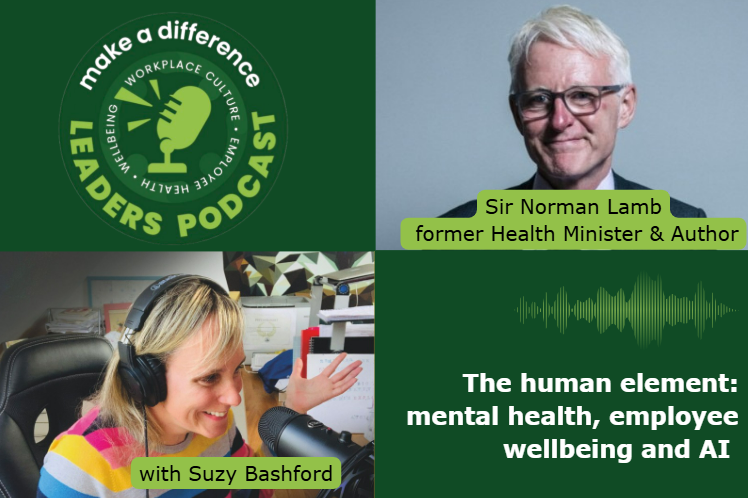
It is a theme explored in the Make a Difference Leaders podcast, where Suzy Bashford spoke to Elliott Rae, founder of Parenting Out Loud, about why senior dads need to parent more visibly for genuine culture change. Rae argues that senior leaders strongly influence workplace culture and dads’ willingness to take enhanced parental leave or work flexibly, while fear of judgement and presenteeism can encourage men to conceal their caring responsibilities.
Senior dads are culture-setters
The implication for employers is important.
If a senior male leader takes parental leave openly, talks about being a dad and returns to work without his commitment being questioned, it sends a message that caring and career progression are not competing identities.
If men rarely see senior colleagues taking leave – or see people treated differently when they do – they receive another message.
The policy may say: “You are entitled to this.”
The culture may say: “But serious people don’t really take it.”
That distinction matters.
Rae’s Parenting Out Loud work focuses on creating cultures where working dads can be open about their caring responsibilities. It emphasises visible role modelling, flexible working, parental leave, manager influence and challenging outdated assumptions about what it means to be a working father.
What should employers look at?
The Goldman Sachs case provides a useful prompt to look beyond policy design and examine lived experience.
Do men actually feel able to take parental leave?
Employee listening, engagement surveys and conversations with working dads can reveal whether there is a gap between entitlement and confidence to use it.
Are senior men visible as carers?
Role modelling matters particularly in cultures where long hours, presenteeism or constant availability are still associated with commitment.
What happens when someone returns?
The welcome back, allocation of work, access to opportunities and subsequent career conversations can all communicate whether someone is still seen as ambitious and valued.
Are managers equipped to support working fathers?
A policy cannot change culture if line managers inadvertently signal that caring responsibilities are an inconvenience.
And perhaps the most revealing question:
What behaviour gets rewarded?
If employees who are always available are seen as more committed than those who protect time for their families, the organisation is communicating something very different from its written policies.
Men’s health means creating healthier lives, not just healthier employees
The Goldman Sachs case should not be interpreted as suggesting that every employer with a generous parental leave policy has a culture problem.
Nor does the tribunal finding mean that the bank’s stated reasons for selecting Reeves for redundancy had no basis at all. The tribunal concluded that there was a 50% chance Reeves would have been fairly dismissed anyway following a proper redundancy process, even in the absence of the discriminatory treatment, and this was reflected in the compensation awarded.
Indeed, the tribunal applied a 50% reduction to the compensation because it considered there was a 50% chance Reeves would have been made redundant anyway, even absent the discriminatory treatment.
But the case does offer a powerful reminder that policy and culture have to work together.
For men’s health, that means thinking beyond individual resilience and wellbeing interventions to the conditions in which men work and live.
Men need to be able to be fathers, partners, carers and colleagues without feeling that one identity has to be hidden to protect another.
That is also why the conversation about men’s health and the conversation about workplace culture cannot be separated.
Because ultimately, a workplace can tell men what they are entitled to do.
Culture tells them what they believe it is safe to do.
And if employers want healthier men, healthier families and healthier workplaces, that is a distinction worth paying attention to.
You might also like: