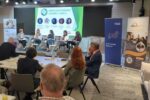
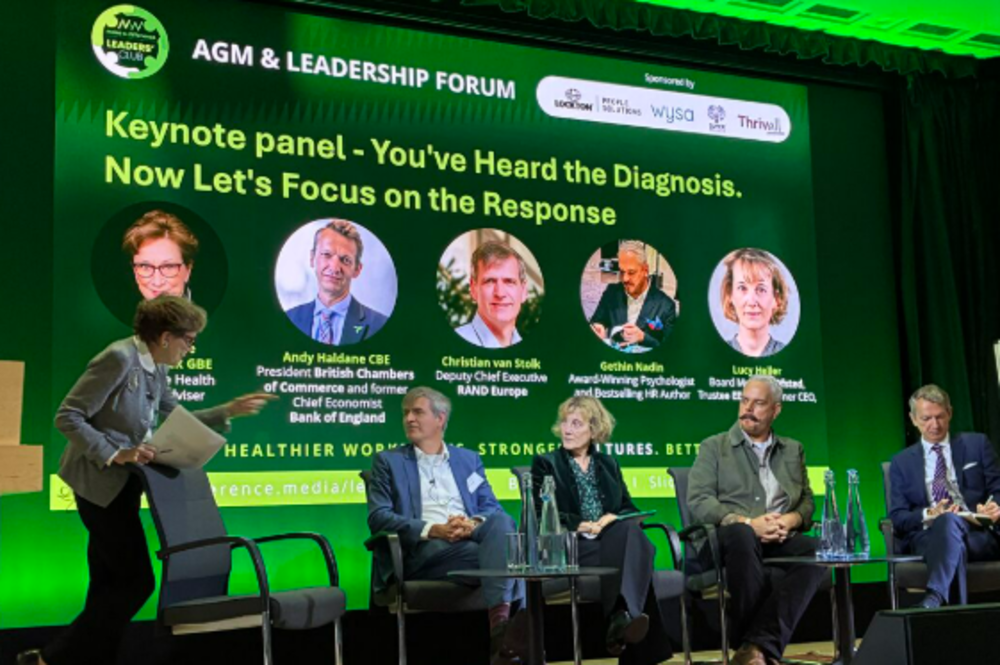
The energy at our Make a Difference Leaders AGM & Leadership Forum at the British Library was palpable. The room brought together a mix of familiar faces and new voices, all with valuable perspectives on workplace culture, employee health and wellbeing. Some were sharing years of experience; others were exploring these issues from a fresh perspective.
One impression stood out: a real shift is underway, with business, government and the wider health and education systems increasingly pulling in the same direction. We’re still processing the conversations, but here are some of the early reflections from attendees.
Why the future of work depends on getting health right
Our opening keynote from Andrew Haldane, President of the British Chambers of Commerce and former Chief Economist at the Bank of England, set the scene by connecting the future of work with skills, lifelong learning, health and economic growth.
The discussion made clear that these issues cannot be treated in isolation. As Jonathan Gawthrop of OCS reflected in his post about the event on LinkedIn, younger generations face the prospect of being materially worse off than their parents. Addressing that challenge requires business, government and society to work together – including by creating the conditions in which people can develop, stay healthy and thrive at work.
Workplace health is increasingly being recognised not simply as an employee benefit or an HR responsibility, but as part of a much bigger conversation about the UK’s workforce, productivity and future prosperity.
The end of wellbeing as an awareness campaign?
There was a sense that the conversation is at last moving beyond awareness-raising towards a more systemic approach: one that looks at how work is designed, how leaders make decisions and how organisations turn good intentions into everyday practice.
The role of managers is a crucial part of the picture, but it also raises a wider question: how do organisations build health and wellbeing into the way they operate, rather than relying on individual initiatives to compensate for problems elsewhere in the system?
Whether you look at this through a risk or performance lens, the challenge is to make prevention, early intervention and supportive working environments part of business as usual – with clear accountability and an understanding of what is actually making a difference.
Psychologist and author Gethin Nadin also challenged the short-term thinking that can undermine progress, suggesting that even a five-year strategy may be too short a horizon when it comes to employee health. Building healthier workplaces requires sustained commitment, not a succession of short-lived initiatives.
From the Budget to the boardroom: who needs to do what differently?
The discussions ranged from the role of employers and government to the changing needs of a multigenerational workforce. Different generations may face very different challenges around health, financial wellbeing, skills and employment – and a single approach will not necessarily work for everyone.
Conversations around the Budget also raised questions about employer incentives, support for young people and how to help more people access and remain in work.
These are interconnected challenges. Employers cannot solve them all alone, but they have a significant role to play alongside policymakers and wider support systems. The opportunity lies in getting the different levers working together, rather than treating workplace health, skills, employment and economic growth as separate agendas.
Can work leave people healthier than when they arrived?
One question captured the ambition behind many of these discussions: what if work sent people home healthier and better than when they arrived?
It is a powerful way to think about the opportunity – and a challenge to organisations to look beyond reducing harm or responding when people become unwell. Work can affect people’s physical and mental health, their confidence, their relationships and their sense of purpose. The experience of work can either deplete people or help them thrive.
Achieving the latter means looking at the whole working environment: leadership behaviours, job design, workload, flexibility, relationships, opportunities to learn and the support available when life becomes difficult. It also means recognising that people’s needs and experiences differ, and that healthier workplaces are built through everyday decisions as much as formal policies.
The conversations are only just beginning
What struck us most was how closely the themes connected. Leadership, management, prevention, skills, young people’s prospects, employee experience and national productivity are not separate conversations. They are different parts of the same challenge.
There is growing awareness, stronger evidence and increasing policy attention. The opportunity now is to turn that momentum into practical, sustained action – and to learn from employers already testing new approaches.
Thank you to everyone who contributed so openly to the day. We’ll be sharing more reflections soon, including the strategic synthesis session led by Dr Richard Heron, which brought the conversations together and considered the priorities for moving forward.
If you would like to receive the post-event report, as well as invitations to join closed-door, sales-free, virtual roundtable discussions, regular Leaders’ Lunches and more, apply to join Make a Difference Leaders free here.
You might also like: