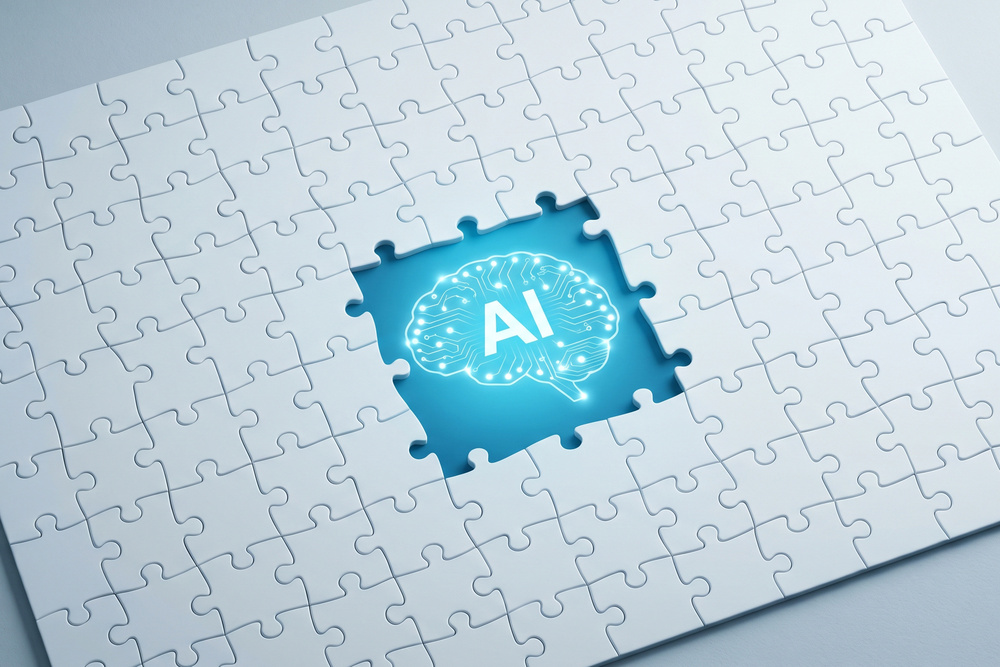
Companies are investing heavily in AI tools. Are they investing equally in the brains expected to use them?
In the age of AI, the real competitive edge is not just adoption. It is a workforce that can focus, recover, adapt, and think clearly under pressure.
Every AI strategy promises productivity. But there is a harder question employers should be asking: what happens when work gets faster, more fragmented, and more cognitively demanding than the human brain can sustainably handle?
Microsoft’s 2025 research found employees are interrupted every two minutes during core working hours, while in Great Britain, stress, depression, and anxiety accounted for millions of working days lost last year. AI is arriving in a work environment that many employees already experience as overloaded.
If AI is accelerating a workday that already feels demanding, the real competitive edge may not be AI alone, but a workforce that can still focus, recover, adapt, and think clearly.
AI is speeding up work. It is not reducing the load on people by default.
The promise of AI often sounds straightforward: less admin, faster outputs, more efficiency.
But technology does not automatically remove pressure from work. In many organisations, it simply changes where that pressure sits.
AI can reduce repetitive tasks, but it can also introduce new forms of cognitive load. Employees may need to process more information, evaluate AI-generated outputs, switch attention between tools and channels, and make more rapid decisions. The result can be a workday that feels faster without necessarily feeling easier.
This is not really a technology challenge. It is a work design challenge.
Because if the rhythm of work stays the same — constant notifications, endless context switching, and an expectation of always being available — adding AI can simply mean asking people to run faster on an already crowded track.
Many HR leaders recognise this already. People rarely say they are overwhelmed because they have too little technology. They say they are overwhelmed because they struggle to think clearly, stay focused, and mentally switch off at the end of the day.
The human edge is becoming more valuable, not less.
As AI takes over more routine work, human capabilities become increasingly important.
Recent thinking around brain capital — the combination of brain health and the skills that help people think, adapt, and perform — suggests that qualities such as resilience, creativity, judgement, emotional intelligence, and adaptability may become increasingly valuable in the future workplace.
Or in simpler terms: the more AI handles predictable work, the more value shifts towards the things humans do best.
Clear thinking during uncertainty.
Building trust.
Seeing patterns.
Understanding nuance.
Making good decisions when there is no obvious answer.
These are sometimes called “brain skills”, but they are not abstract leadership concepts. They are practical abilities people use every day — and they are strongly affected by factors such as stress, sleep, movement, recovery, and social connection.
That means wellbeing and performance may increasingly be two sides of the same conversation.
Three questions every HR leader should ask before rolling out the next AI tool
Before introducing another platform, workflow, or AI assistant, it may be worth asking:
Are we reducing admin or simply increasing cognitive load?
Removing tasks is not the same as reducing mental effort. New systems sometimes create additional decisions, complexity, and interruptions.
Are we training people only on tools, or also on focus, recovery, and adaptability?
Technology skills matter. But so does helping people build the capacity to sustain performance over time.
Are our wellbeing offers easy enough to use in real life, not just good-looking on paper?
Support only works if people can realistically fit it into everyday life. The easier and more accessible it is, the more likely people are to use it.
A simple place to start
Creating a healthier, more sustainable work environment does not necessarily begin with a large-scale transformation.
Sometimes it starts with making support easier to access.
A wellbeing partner like EGYM Hussle can play an important role by giving employees flexibility and practical options that fit around real lives rather than ideal schedules.
From there, organisations can build small, sustainable habits that support focus, recovery, and resilience.
One of EGYM Hussles’ popular fitness partner is Yogaia, offering online live and on-demand yoga, fitness and guided meditations.
To support with overall brain health, Yogaia has designed a 21-day Mind Cleanse around exactly this idea: ten minutes a day of practical exercises intended to reduce mental overload, improve concentration, and help people reset. For those wanting to try it themselves, EGYM Hussle readers can access 50% off the next programme using the code EGYMHUSSLE.
Because the companies that get the most from AI will not simply be the ones with the best tools.
They will be the ones whose people can use those tools without burning through their attention, energy, and judgement.
That starts with better work design, better wellbeing support, and small habits that help people stay sharp.
You might also like: