
Workforce health has quietly become one of the defining business issues of the decade.
Healthy life expectancy is declining, absence and presenteeism are rising, and organisations are under growing pressure to show not just that they care about their people, but that they can prove it. Not just for optics but because it makes business sense – to mitigate against risks associated with ill-health and to enjoy the benefits that are there to be reaped when you invest in people and improving health.
Employers no longer have the luxury of treating workforce health as something that sits alongside growth. Increasingly, it is the driver for growth.
Why individual wellbeing initiatives aren’t enough
Most organisations have, by now, invested in some form of wellbeing support – an EAP, mental health first aiders, perhaps a wellness app or two. These things matter. But they tend to treat the symptoms of an unhealthy culture rather than its causes.
The uncomfortable truth is that culture is shaped less by policy documents than by what leaders actually do, day to day, under pressure. A manager who responds to emails at 11pm, cancels their own annual leave, or treats exhaustion as a badge of honour sends a far louder message than any wellbeing policy ever could. People don’t calibrate their behaviour to what’s written in the handbook. They calibrate it to what they watch their leaders survive.
This is why sustainable change in workplace health rarely starts with the individual employee. It starts with leadership behaviour – and with whether that behaviour is genuinely modelled, or just talked about.
Alignment from boardroom to frontline
The second, harder truth is that leadership behaviour alone isn’t sufficient either. A brilliant, self-aware manager working inside a structurally unhealthy system – one with unrealistic workloads, unclear roles, or a culture that quietly punishes boundary-setting – will eventually burn out too, however good their intentions.
That’s why healthier organisations need alignment at every level: strategic commitment from the boardroom, translated into practical behaviours by middle management, and reinforced by how work is actually designed on the frontline. Without that alignment, wellbeing efforts tend to stall in one of two places – either as well-meaning but disconnected initiatives with no organisational teeth, or as top-level policy that never reaches the people actually experiencing the pressure.
Getting this alignment right is difficult, precisely because it requires leaders to look honestly at their own behaviour, not just their organisation’s policies.
What we’ll be exploring in our session
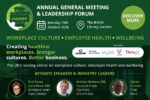
Thrivall is looking forward to facilitating a breakout session, Leading Healthy Work: Building Cultures Where People Thrive, at the upcoming Make a Difference AGM & Leaders Summit on 19th October at The British Library when we’ll be exploring this topic in greater depth.
Our approach is built around three practical threads.
The first is leadership behaviour itself – the specific, learnable habits that distinguish leaders who create genuinely healthy teams from those who simply talk about wellbeing. This isn’t about adding another responsibility to an already full plate; it’s often about doing less, more deliberately – protecting focus time, modelling reasonable boundaries, and being honest about capacity rather than performing resilience.
The second is psychological safety – the conditions that allow people to flag a problem, admit a mistake, or ask for help before it becomes a crisis. Psychological safety is frequently discussed in the abstract; we’ll be looking at what it actually requires from a leader in a normal, busy working week.
The third is using organisational data well. Engagement surveys, exit interviews, absence patterns and turnover data often sit in different spreadsheets, owned by different teams, rarely connected to one another. Read together, they tend to reveal structural barriers to healthy work – job design issues, workload distribution, unclear accountability – that no amount of individual resilience training can fix. Part of our session will focus on how leaders can start joining these dots.
Learning from leaders who model it
One of the elements we’re most looking forward to is hearing directly from a leader who has done the harder, less comfortable work of prioritising their own health and visibly modelling it for their team – not as a wellness gesture, but as part of how they lead.
There’s a particular kind of permission that only senior leaders can grant. When a leader takes proper annual leave without being contactable, or is open about needing to leave on time for a commitment outside work, it does more to shift a team’s norms than any all-staff email. Hearing how that plays out in practice, including the trade-offs involved, is often more useful to attendees than any framework.
Joining the conversation
The Leadership Forum brings together employers across sectors who are grappling with these same questions, alongside voices including Professor Dame Carol Black GBE, Andy Haldane CBE, Clarke Carlisle, Chris van Stolk and Gethin Nadin. Beyond the keynote and panel sessions, the day is designed around genuine peer-exchange – working-lunch discussion groups and breakout sessions intended to leave attendees with clarity and connections, rather than another list of things to do.
We’re looking forward to contributing to that conversation, and to the discussions it sparks afterwards. If workforce health, leadership behaviour and organisational design are on your agenda this year, details and tickets for the 19 October event are available here.
About the author
Anwen Cooper is Co-founder at Thrivall, leading the mission to get everyone thriving at work and beyond. Thrivall is an award-winning, B Corp certified company, delivering leader development and support programmes to build resilience and mental fitness, sustaining high-performing teams. Thrivall brings together qualified and experience training facilitators, performance psychologists and coaches realise everyone’s potential to become better leaders to build better organisations for a better world for all. Find out more at ww.thrivall.co.uk
You may also like: