
With Occupational Health Awareness Week in full swing, the latest Keep Britain Working update puts the role of occupational health firmly in the spotlight — and highlights why it needs to be part of a more preventative approach to workplace health.
This week marks Occupational Health Awareness Week 2026, an opportunity to raise awareness of what occupational health (OH) is and the value it can bring to workplace health.
The timing is particularly significant.
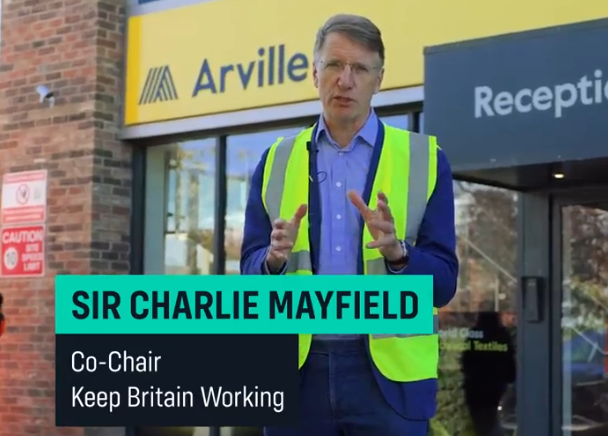
During the same week that awareness of occupational health is being celebrated, the latest update from Keep Britain Working was published, setting out plans for Britain’s first Workplace Health System. As explained in this article, the update places earlier action, prevention and better workplace health provision at the heart of its ambitions to help people stay healthy and in work.
For occupational health, this represents an important opportunity to demonstrate that its role extends beyond supporting people once a health problem has become established.
Using occupational health earlier
The Society of Occupational Medicine (SOM), which is leading Occupational Health Awareness Week, is using this year’s campaign to communicate that occupational health professionals are experts in work and health and to encourage people to use occupational health early.
It is a simple message, but one that raises an important question: how early is early?
As consultant and speaker Amy McKeown put it in a LinkedIn post marking the start of the week: “How about using OH to get people INTO work?”
That question gets to the heart of the changing workplace health conversation.
Occupational health has traditionally been associated with assessing people who are already experiencing health difficulties, advising on adjustments, supporting absence management and helping people return to work.
Those functions remain essential. But there is growing recognition that OH can also play a role much earlier – helping employers identify risks, understand the relationship between health and work, support managers and employees, and intervene before a problem escalates into prolonged absence.
From reaction to prevention
That shift is reflected in the latest Keep Britain Working update.
The report argues that the greatest opportunity is not simply to help people return to work once they have become detached from it, but to prevent avoidable work loss in the first place. It proposes a Workplace Health System built around three connected elements: better, more inclusive workplaces; better workplace health provision; and better intelligence on workplace health and inclusion.
Occupational health has a natural role across all three.
It can help employers understand where work may be contributing to health problems, provide expert advice on adjustments and work design, and support employees to remain in work where that is safe and appropriate. It can also provide insight into recurring issues that may point towards wider organisational or workplace risks.
Crucially, the new Keep Britain Working model explicitly includes occupational health within a broader landscape of workplace support, alongside HR, employee assistance, GPs, insurers, vocational rehabilitation and specialist treatment. The ambition is to move away from fragmented services towards a more connected approach, with earlier support and clearer coordination.
A more connected approach to workplace health
That is also the direction highlighted by Spire Occupational Health in its Occupational Health Awareness Week commentary.
The organisation describes workplace health as a “connected ecosystem of support”, with occupational health increasingly being connected to preventative, advisory and treatment pathways including physiotherapy, mental health support and proactive wellbeing initiatives.
Its message is that the conversation needs to shift from reaction to prevention: not simply helping people return to work, but helping them stay well, stay productive and thrive at work in the first place.
This is an important distinction for employers.
Prevention does not mean replacing occupational health with another layer of wellbeing activity. Nor does it mean expecting OH to take responsibility for every aspect of workforce health.
Instead, it is about recognising where occupational health expertise fits within a wider system – and making that expertise available at the point when it can have the greatest impact.
Making OH part of the workplace health system
The Keep Britain Working update is clear that employers have a central role to play. Its proposed approach calls on employers to act early, make timely adjustments and support practical stay-in-work and return-to-work plans. It also envisages workplace health provision that combines advice and guidance, case management, early support and treatment, and insight to help employers improve their workplace offer.
Occupational health cannot deliver all of this alone. But neither can the ambitions of Keep Britain Working be achieved without it.
For employers, the opportunity is to think differently about when and how OH is used: not simply as a service to call when someone is already absent or struggling, but as a source of expertise that can support prevention, early intervention and healthier work.
That makes Occupational Health Awareness Week more than an awareness campaign. It is a timely reminder that if workplace health is to become a genuine part of the UK’s approach to prevention, occupational health needs to be part of the conversation from the beginning – not brought in at the end.
You might also like: