Header image contains public sector information licensed under the Open Government Licence v3.0. Source: Department for Work and Pensions.
The latest Keep Britain Working update sets out plans for Britain’s first Workplace Health System, with prevention and earlier intervention at its heart.
Workplace health is increasingly moving beyond the wellbeing agenda and into the heart of the UK’s economic growth conversation.
That is the message from the latest Keep Britain Working update, A National Growth Opportunity, published today by the Department for Work and Pensions (DWP).
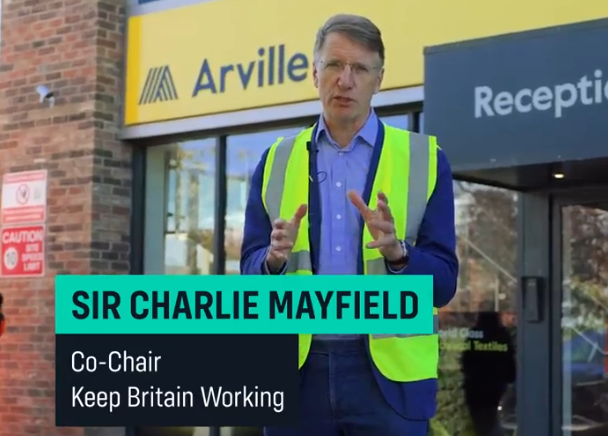
Sir Charlie Mayfield, who is leading the Keep Britain Working programme, described the opportunity in a LinkedIn announcement shared by the DWP (as shown in the header image above):
“It’s all about seeing ill-health and disability and doing a better job on that. There’s actually a big and attainable growth opportunity for the whole of the UK.”
The latest update sets out plans for Britain’s first Workplace Health System, bringing together employers, the NHS, local authorities and other support services to help prevent people falling out of work unnecessarily and improve support for those with health conditions or disabilities.
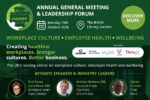
The fundamental link between health and growth, and what employers can do to harness this moment of change and reset to make a real difference in their workplaces is a key theme of our Make a Difference Leaders AGM & Leadership Forum, taking place at the British Library on 19th October. You can find full details and register your interest in attending here.
The cost of poor workplace health
The scale of the challenge is significant.
Since 2019, the number of working-age people out of work due to ill health has risen by 800,000, with the total cost to the UK economy estimated at around £212 billion a year.
The update also highlights the importance of acting early. Around 300,000 people with a health condition leave work each year. For someone absent for four to six weeks, there is a 96% chance of returning to work. After a year, fewer than half return.
The report argues that preventing even a modest proportion of this avoidable loss could make a meaningful difference at a national level. A one percentage point increase in workforce participation would mean around 330,000 more people in work – equivalent to the productive capacity of a city the size of Cardiff.
For employers, the message is equally relevant: earlier action can help people remain in work rather than allowing health problems to escalate to the point where absence or job loss becomes more likely.
A more joined-up approach to workplace health
The proposed Workplace Health System is intended to address one of the longstanding problems in this area: fragmented support.
Eleven regional Vanguards and more than 200 Vanguard organisations are already testing approaches with employers, unions, providers and disabled people across the UK.
These include developing return-to-work plans with employers, making occupational health more accessible to smaller businesses through pooled purchasing, and trialling independent case workers within businesses.
The report’s ambition is to create a more joined-up system, but employers also have existing tools that can support earlier intervention and help people stay in work.
Katharine Moxham, spokesperson for Group Risk Development (GRiD), welcomed the report’s ambition and highlighted group income protection as one such option. She said it can provide a “proven, reliable backbone” to an employee health and wellbeing programme, with built-in support including counselling, physiotherapy, GP services, employee assistance, vocational rehabilitation and case management.
Moxham also pointed to the relatively low average cost of group income protection – £27 a month per employee, according to Swiss Re’s Group Watch 2026 – arguing that employers can use the support built into policies to help people remain in work or return more quickly following health-related absence.
Group income protection is one example of the tools employers can use; the broader challenge identified by Keep Britain Working is to create a workplace health system that connects prevention, early intervention, occupational health, healthcare and employment support – another key theme we’ll be exploring at our Make a Difference Leaders AGM & Leadership Forum, taking place at the British Library on 19th October.
Why prevention matters to employers
The focus on prevention and earlier intervention will be familiar to many organisations already working to improve employee health and wellbeing. But the latest update arguably strengthens the case for treating workplace health as a strategic business issue rather than a collection of individual initiatives.
Commenting on LinkedIn, Sarah McIntosh, Chief Executive of MHFA England and the Association of Mental Health First Aiders, welcomed the emphasis on workplace health and highlighted the importance of earlier action, psychologically safe cultures and accessible support. She described supporting mental health at work as both “the right thing to do” and a business imperative that can contribute to more productive workplaces and a stronger economy.
Jonathan Gawthrop, Global QHSE leader, also highlighted in his post on LinkedIn, the potential of the approach to create more inclusive workplaces, prevent health conditions from escalating and support more successful returns to work – welcoming the multi-disciplinary approach that is being taken.
The challenge now is turning the ambition into practice.
From national ambition to workplace action
For employers, the emerging Workplace Health System raises some important questions: how early are we identifying health concerns? Do managers have the confidence and capability to respond? Can employees access the right support before a problem becomes more serious? And are we measuring whether our approach is actually helping people stay well and stay in work?
The Keep Britain Working programme is continuing to work with employers and regional Vanguards to test what works, while developing an employer standard with the British Standards Institution. The intention is to make effective workplace health support more accessible, including for smaller organisations.
The direction of travel is clear. Workplace health is no longer being framed solely as an issue for HR, occupational health or wellbeing teams. It is increasingly being positioned as part of the UK’s productivity, participation and growth agenda.
For employers, that makes prevention more than a health intervention. It is becoming an important part of building healthier, more inclusive and sustainable workplaces – and retaining the people and skills organisations need to thrive.
The fundamental link between health and growth, and what employers can do to harness this moment of change and reset to make a real difference in their workplaces is a key theme of our Make a Difference Leaders AGM & Leadership Forum, taking place at the British Library on 19th October. You can find full details and register your interest in attending here.
You might also like: