
Many employers now offer a raft of comprehensive Health and Wellbeing benefits but, as budgets tighten, the balance between benefits and job design is ever more important
The workplace is now awash with Health and Wellbeing benefits for employees, and increasingly their families, friends and even pets.
Mental health support. Virtual GP access. Financial wellbeing coaching. Apps. Private Medical Insurance. Screenings. Neurodiversity assessments. Pet insurance.
Yet against a backdrop of rising sickness absence, economic uncertainty and increasingly stretched workforces, a growing number of workplace wellbeing leaders are questioning this tendency to think ‘more is better’.
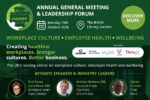
Moving beyond siloed initiatives to embed joined-up health and wellbeing strategies that deliver real impact is a key theme of our Make a Difference Leaders AGM & Leadership Forum, taking place at the British Library on 19th October. You can find full details and register your interest in attending here.
Making it ‘how you operate’
Just because you have an impressive benefits package, that caters for every life stage, does not mean that Health and Wellbeing is embedded.
Just because your Health and Wellbeing offering is measurable, does not mean it is effective.
For Nikki Kirbell, Global Head of Wellbeing at Rolls Royce, the distinction between offering Health and Wellbeing and genuinely embedding it in an organisation is simple.
“A wellness programme is something you do and embedding wellbeing is how you operate,” she says.
“Programmes, campaigns and benefits can help, but wellbeing is ultimately the outcome of how people experience work every day. It’s shaped by leadership, culture, job design, workload, relationships and the systems people work within.”
Is experience of work improving?
And therein lies the rub: if Health and Wellbeing only exists in the wellbeing team’s plan, she argues, it isn’t embedded.
“But if it influences how leaders lead, how work is designed and how decisions are made, it is.”
Kirbell believes organisations commonly make the mistake of focusing on activity rather than outcomes.
“It’s easy to measure campaign attendance, benefit uptake or training completions,” she says.
“But it’s much harder to ask whether people’s experience of work is genuinely improving.”
Making Health and Wellbeing part of culture
Another danger – which we’ve covered extensively at Make A Difference Media – is treating Health and Wellbeing primarily as an individual’s responsibility.
“Personal resilience matters, but if workload, leadership or work design are the issue, no amount of wellbeing activity will solve the underlying problem.”
As someone recently told her: “You can’t downward dog your way out of a bad line manager.”
A catchy line, but one that captures an important, long-running live debate in the workplace.
“When wellbeing is part of normal business practice, it stops feeling like an ‘initiative’ and starts becoming part of the culture,” she says.
Wellbeing’s ‘golden thread’
One of the challenges is that Health and Wellbeing has traditionally been associated with a certain silo.
Depending on the organisation, it might sit within HR, Occupational Health, Health and Safety, Reward or a dedicated Wellbeing team. But none of those functions alone can control how employees experience work.
Kirbell describes Health and Wellbeing as a “golden thread” running through the organisation.
“HR, Reward, Benefits, Occupational Health, Belonging, L&D, IT, Communications and business leaders all influence the employee experience in different ways,” she says.
“The challenge isn’t getting them around the table but aligning them behind a shared definition, common outcomes and clear accountability.”
That doesn’t necessarily mean creating yet another cross-functional committee or restructuring the organisation. There’s actually much evidence that the endless corporate restructures are taking their toll on Employee Health and Wellbeing and “transformation fatigue” is on the rise.
Interdependencies between functions
Rather than restructure, employers are better to recognise and strengthen the interdependencies between functions.
At AtkinsRéalis, for example, Wellbeing sits within the Health, Safety and Environment function, but works closely alongside HR.
Neil Christie, Head of HSE Excellence, says the two functions have retained their different areas of expertise while ensuring that their strategies are developed in conversation with one another.
When AtkinsRéalis developed its health, safety and wellbeing strategy, the HR function was consulted. Meanwhile, the wellbeing leader also participated in wider HR forums.
The result, says Christie, is less complicated than it might sound.
“We’re very well connected with the HR function,” he says.
Perhaps rather than debating where Health and Wellbeing should sit structurally, employers should ask who influences employee experience of it. The answer is almost every function, but particularly leadership.
From physical safety to psychological risk
AtkinsRéalis’s decision to position wellbeing within Health and Safety is reflective of a wider shift in how organisations are thinking about workplace risk.
Traditionally, health and safety has been primarily associated with physical hazards and built up significant credibility to become accepted as ‘how we do business’. But for many modern organisations, particularly those with large knowledge-worker populations, some of the greatest risks to health are likely to be psychological.
Stress. Excessive workload. Pressure. Targets. Lack of recovery time. A poor line manager.
Christie says AtkinsRéalis has been working with ISO 45003, the international standard for managing psychological health and safety at work, initially applying its approach at project level before considering how it could be developed more widely.
For him, the benefit of a risk-management approach is that it encourages prevention rather than waiting for people to become unwell.
“A risk assessment should be done proactively before we’re actually causing harm,” he says.
The protocol is second nature to anyone working in health and safety: identify risks, understand their causes and intervene as far upstream as possible.
It avoids what Sir Charlie Mayfield is trying to tackle in his Keep Britain Working review: only offering support once someone has reached crisis point.
The power of a shared language
One of the most practical examples of embedding wellbeing comes from AtkinsRéalis’s leadership programme, Thrive.
Originally developed from an existing safety leadership programme, the initiative evolved after early pilots revealed that leaders wanted to spend more time discussing health and wellbeing.
The programme was developed over a year and formally launched towards the end of 2023.
Since then, almost 3,000 leaders have participated.
But Thrive is not a wellbeing ‘training’ course. Its ambitions are much broader. It aims to influence the way leaders understand health, safety, wellbeing and, ultimately, the culture they create around them.
“We’re trying to say: this is how we work. This is how we are as an organisation,” Christie says.
Common language and framework
The programme provides leaders with a common framework for understanding concepts including emotions, intensity, recovery and decision-making.
It has also created a shared vocabulary which translates, not only into everyday language, but also everday actions and routines.
Terms including “weak signals”, “rumble strips” and the “wobbly line” are now being used by leaders across the organisation.
“You can hear the different language people are using and the different emphasis,” says Christie.
At first glance, that might sound tokenistic, or even a bit twee, but shared language can be a powerful mechanism for embedding wellbeing. That’s why the surreptitious removal of key words that had become associated with the Health and Wellbeing discipline – like ‘diversity’ and ‘DEI’ – has felt so damaging to some practitioners.
Lessons from DEI backlash
Perhaps one of the lessons from the DEI backlash is that employers need to develop their own language, like AtkinsRéalis has, which resonates with their particular employee base.
Jamie Broadley, Head of Health and Wellbeing at the Serco Group, which employs approximately 30,000 people in the UK in varying public service roles, agrees. He sees himself as the linguistic bridge between the boardroom and the coalface “translating” terminology and “on the hunt for key phrases that resonate”.
One of the most effective ‘translations’ came from an employee in an engagement survey:
“They commented ‘I feel like my manager gives a sh*t about me’. That’s become an important example to use with supervisors about how we want employees to feel. I’ve even used it in board meetings,” says Broadley.
“It’s about recognising what’s going to get cut through.”
Culture is notoriously difficult to measure, but survey feedback on Thrive suggests participants are taking practical tools away from the programme.
Avoiding a two-tier system
It’s purposely not designed to give busy, overloaded leaders another lengthy list of wellbeing activities to implement. Instead, it gives them a structure for having better conversations, as part of their working day, and for recognising how health, safety and wellbeing influence one another.
It’s also designed to work across very different employee groups, whether people are working in offices, on projects or out in the field. This avoids creating a two-tier system for office and non-office workers.
The content remains consistent, but the way individuals apply it differs according to their experiences and working environments. That consistency, combined with the mixing of people from different parts of the organisation during training, helps tackle one of the biggest barriers to embedding heath and wellbeing: silos.
Truth comes out in tough times
Of course, the ultimate test of whether an organisation genuinely cares about employee health and wellbeing does not happen during a wellbeing campaign or ‘awareness day’. It comes when working life gets difficult.
Economic uncertainty, restructuring and the rapid development of AI are creating new pressures for employers and employees alike. What matters to employees is not what an organisation says about its culture, but how it treats them in adversity.
Take how employers handle redundancies.
“People remember how you treated them on the tough days”, said Broadley. “Not just the easy days. It’s the signals you send through the challenging times that really demonstrate your culture”.
The difference often comes down to whether organisations, and the line managers in particular who are handling these challenging situations, remember they are dealing with people not just policies. Perhaps when this human approach is simply ‘how we do business’ is when you know you have successfully embedded Employee Health and Wellbeing into your company strategy.
Moving beyond siloed initiatives to embed joined-up health and wellbeing strategies that deliver real impact is a key theme of our Make a Difference Leaders AGM & Leadership Forum, taking place at the British Library on 19th October. You can find full details and register your interest in attending here.
You might also like: