Most organisations look for culture problems in the wrong place.
When engagement scores fall, trust declines, or collaboration breaks down, attention quickly turns to managers, employees or internal programmes. New initiatives are launched. Surveys are commissioned. Action plans are developed.
Yet the greatest influence on organisation culture isn’t found on the front line. It’s sitting around the leadership table.
We pour resources into culture programmes, engagement initiatives, and wellbeing strategies. But if the leadership team itself is siloed, conflict-averse, and pulling in different directions, we’re building on sand. Fiona Wright explains why culture change must start at the very top.
Most approaches to leadership team development treat them like any other team – applying the same frameworks, the same diagnostics, the same away-day formats that work perfectly well elsewhere. But leadership teams face a fundamentally different set of pressures.
They are navigating constant tension between their functional responsibilities and the broader needs of the business. They are being pulled between short-term operational urgency and long-term strategic intent. They are navigating complex politics with no simple resolution. Apply a generic team model to that reality, and you will get generic results – at best.
What sets the best leadership teams apart comes down to five things that directly shape the culture that radiates outwards from the boardroom into the wider organisation.
1. When leaders pull in different directions, culture fractures
Think about a rowing boat with twelve crew members. When everyone pulls powerfully and in sync, the boat accelerates with impressive speed. Now picture each crew member pulling at different times and in different directions. Despite enormous effort, the boat flails. Many leadership teams, if they’re honest, resemble the second boat.
Team members feel more connected to their function than to their peers around the leadership table. They may even be financially incentivised to prioritise their own function’s results over collective goals. The consequence for the wider organisation is a culture that feels inconsistent and politically charged because the signals coming from the top are fragmented.
The leadership teams that thrive are those in which members share a genuine direction and consistently pull together. They share clear, compelling goals. They hold themselves collectively accountable for outcomes rather than retreating behind functional performance. When the people at the top visibly model shared accountability, it quietly becomes the norm for everyone else.
2. Psychological safety doesn’t start with the front line
When Google set out to understand what made its best teams tick, it found that one factor mattered above all others – psychological safety. In the teams that performed best, people felt safe expressing their views and taking risks without fear of judgement. Without that safety, people default to self-protection, saying what they think others want to hear and staying quiet when they should speak up.
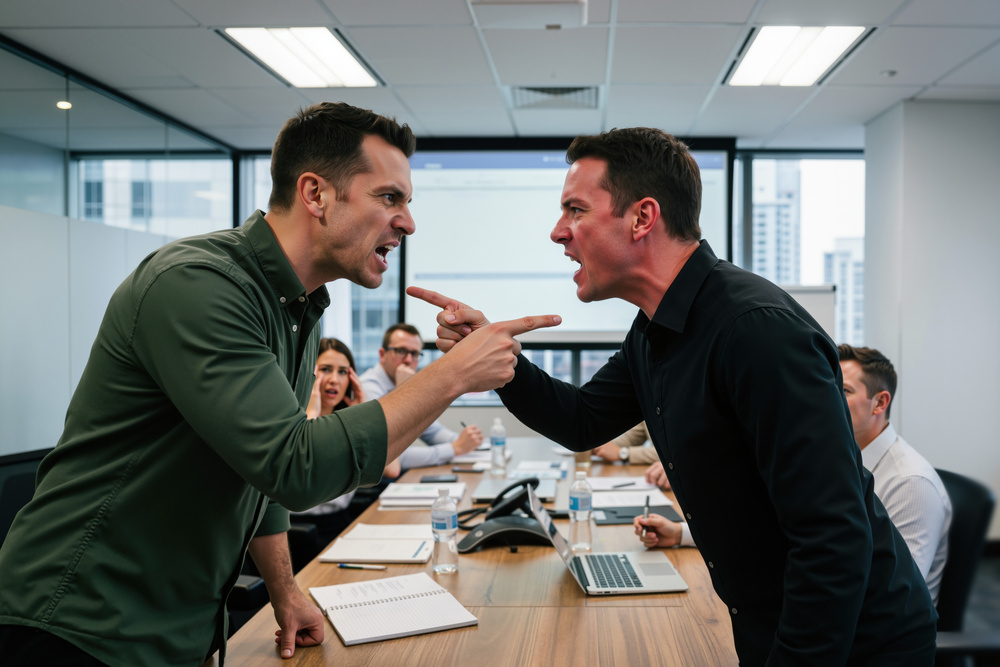
For anyone working to build a psychologically safe culture, this finding should prompt an uncomfortable question: “Does it exist at the leadership team level?” Because if the senior team is operating in a climate of unspoken tension, careful positioning, and avoiding difficult conversations, that is the culture being modelled for everyone below them.
The best leadership teams actively and intentionally build what I think of as valued relationships grounded in mutual respect, genuine care, and the freedom to be honest. They seek out different perspectives and treat mistakes as learning rather than liability. They listen to one another and adapt.
When senior leaders are seen to disagree openly and constructively, to admit they got something wrong, to visibly support each other’s growth, it gives people throughout the organisation permission to do the same. Psychological safety is modelled from the top – it can’t simply be mandated by it.
3. The teams that never stop learning create cultures that grow
The US Navy SEALs conduct After-Action Reviews after every significant operation. These are honest debriefs in which every team member shares their perspective, regardless of rank. The discipline of reflecting on what happened, what worked, and what didn’t is treated as fundamental to future performance.
Many organisations say they value learning.
Far fewer leadership teams genuinely model it.
It’s surprisingly common to see senior leaders encouraging feedback throughout the organisation while resisting it themselves. They ask others to embrace change but become defensive when challenged. They expect reflection from their teams while moving relentlessly from one priority to the next without pausing to examine their own performance.
The best leadership teams bring the same rigour to their own learning. They review their performance continually, seek and act on feedback, and celebrate wins as deliberately as they examine setbacks. Critically, they use conflict constructively – an honest challenge and open debate are welcomed as the route to better decisions.
The impact on organisational culture is significant. When employees see senior leaders genuinely reflecting, welcoming challenge, and openly evolving their thinking, it creates permission for a learning culture at every level. Curiosity becomes acceptable. Experimentation becomes safer. Development becomes part of everyday work rather than a corporate slogan.
When leaders project certainty, invulnerability and sidestep scrutiny, they model the opposite, and no amount of positive internal communication will undo it.
4. Inefficiency at the top has a cultural cost that most organisations don’t account for
F1 pit stops took 20 to 30 seconds in the 1970s. Today, the best crews complete them in under two. That dramatic improvement came from clarity about roles, sequencing, and shared ways of working. Everyone knows exactly what they’re responsible for and executes it with precision.
Many leadership teams are the opposite. Unproductive meetings that consume hours without resolution. Responsibilities that overlap or fall between gaps. Decisions that are made, unmade, and made again. People across the organisation watch this and draw their own conclusions about what the organisation values.
The leadership teams that work well treat operational efficiency as a discipline, not an afterthought. They have clear ways of working, well-defined roles, structured decision-making that draws on diverse expertise, and genuinely productive meetings. This makes the team more effective, and it sets a visible standard for how the whole organisation is expected to operate.
5. The shift from doing to enabling changes everything
In the early 2000s, US Navy captain David Marquet took command of the USS Santa Fe – one of the worst-performing submarines in the fleet. Within two years, it was winning awards for operational excellence. The transformation came from a single decision to stop leading through a leader-follower model and shift to leader-leader relationships instead.
Marquet decentralised decision-making. He set a vision, invested in developing his people’s skills, and then genuinely empowered them to take responsibility. People who had been waiting to be told what to do started taking ownership, and the culture of the whole vessel changed.
It’s a story that resonates because it describes leadership teams that get stuck in the details, fail to let go, and get pulled into day-to-day firefighting, keeping them from the work only they can do. The organisational consequence is a culture of dependency – people waiting for decisions from above, lacking confidence in their own authority, disconnected from any meaningful sense of ownership over their work.
The best leadership teams actively resist this. They empower their people, think in terms of long-term strategy, communicate a clear and compelling direction, and build strong relationships across the organisation. They role model the behaviours they want to see. And in doing so, they create the conditions for a purposeful, trusting, growth-oriented culture.
Culture change begins in the boardroom
Leadership teams are not just responsible for strategy and performance. They are the most powerful culture carriers in any organisation. The way they relate to one another, make decisions, handle conflict, share accountability, and empower others, all of it ripples outwards and shapes the experience of every person in the business.
For HR leaders and those responsible for workplace culture and wellbeing, this is both the hardest thing to hear and the most important. Culture programmes that focus solely on the front line, without addressing what’s happening at the top, are working against themselves.
The organisations where culture change genuinely takes hold are not necessarily those with the most initiatives, the biggest wellbeing budgets or the most sophisticated engagement strategies. They are the organisations where the leadership team has done its own work first. Where senior leaders are aligned, honest with one another, willing to learn, and committed to collective success rather than individual agendas.
Because if culture is ultimately “how things get done around here”, employees learn it first by watching the people at the top.
Before launching another culture programme, leadership teams should ask themselves a more fundamental question: What culture are we modelling every day?
The answer to that question will tell you far more about your organisation’s future culture than any employee survey ever could.
You might also like: