The world’s first International Standard on supporting menstruation and menopause in the workplace was published this week – giving employers a new global framework for moving beyond awareness and towards meaningful workplace change.
ISO 45010:2026 – Occupational health and safety management – Menstruation and menopause in the workplace – Guidance was published by the International Organization for Standardization (ISO) on 7 September. It provides guidance for organisations of any size or sector on developing workplace policies and practices that support menstrual and menopausal health and experiences.
Its significance is not simply that menstruation and menopause have now secured their own international standard. It is that the guidance places these issues firmly within the wider workplace health, safety, wellbeing and inclusion agenda.
From awareness to the system around the employee
For employers, that represents an important shift.
Menopause has become a much more visible workplace issue in recent years, with many organisations introducing policies, guidance and awareness programmes. But a policy alone does not necessarily change an employee’s experience.
As consultant and thought-leader Amy McKeown observed in a post on LinkedIn following the publication of the standard, what matters is that it moves the conversation “well beyond awareness”, looking at workplace culture, policies and procedures, manager capability, workplace design, practical adjustments and how organisations measure whether what they are doing is actually working.
That means asking harder questions about the systems surrounding employees.
Do managers know how to respond when someone raises an issue? Are workplace adjustments genuinely accessible? Do absence and performance processes take account of the challenges someone may be experiencing? Are HR, occupational health, health and safety, workplace design and leadership working together?
As McKeown puts it: “Writing the document is the easy part, but building an organisation that can deliver it is where the real work is.”
A timely development for UK employers
The timing is particularly relevant for larger UK employers.
Employers with 250 or more employees can currently voluntarily publish an action plan alongside their gender pay gap data. Subject to legislation, these action plans are expected to become mandatory from spring 2027. The plans will include steps to address the gender pay gap and support employees experiencing menopause, with employers required to select at least two actions from a government-backed list of evidence-informed measures.
The government’s recommended actions already point towards a more practical approach, including manager training, occupational health support, workplace adjustments, reviewing policies and procedures, and improving flexible working and leave policies.
ISO 45010 therefore arrives at a useful moment. Rather than treating the forthcoming UK requirement as a compliance exercise, employers can use the international standard to help think more broadly about what good practice actually looks like.
Making support part of how work is done
The global nature of the new standard is also significant.
Commenting on LinkedIn, Dr Richard Caddis, Chief Medical Officer at Rolls-Royce, welcomed the move from a UK framework to an international one, highlighting its potential to help organisations outside the UK “move the dial” on menstrual health and menopause and make the framework more useful for colleagues and managers wherever they are.
That matters for employers with international workforces, but also reflects a broader change in expectations. Menstrual and menopausal health is increasingly being understood not as an issue to be addressed through a single policy or awareness campaign, but as part of creating workplaces where people can remain healthy, productive and engaged throughout their working lives.
As Kathleen Riach, Professor, ISO Convenor and W20 UK Delegate, said in announcing the standard, it is intended to be “a standard that belongs to everyone.”
For employers, the opportunity now is to make sure it becomes more than a document.
The question is not simply whether an organisation has a menopause policy. It is whether its culture, managers, processes and working environment make it possible for that policy to work in practice.
And with UK employers facing a more formal expectation to demonstrate action from 2027, that is a conversation worth having now.
ISO – International Organization for Standardization have made the ISO 45010:2026 – Occupational health and safety management – Menstruation and menopause in the workplace – Guidance available to access globally. Details of how to download a copy in your country can be found here.
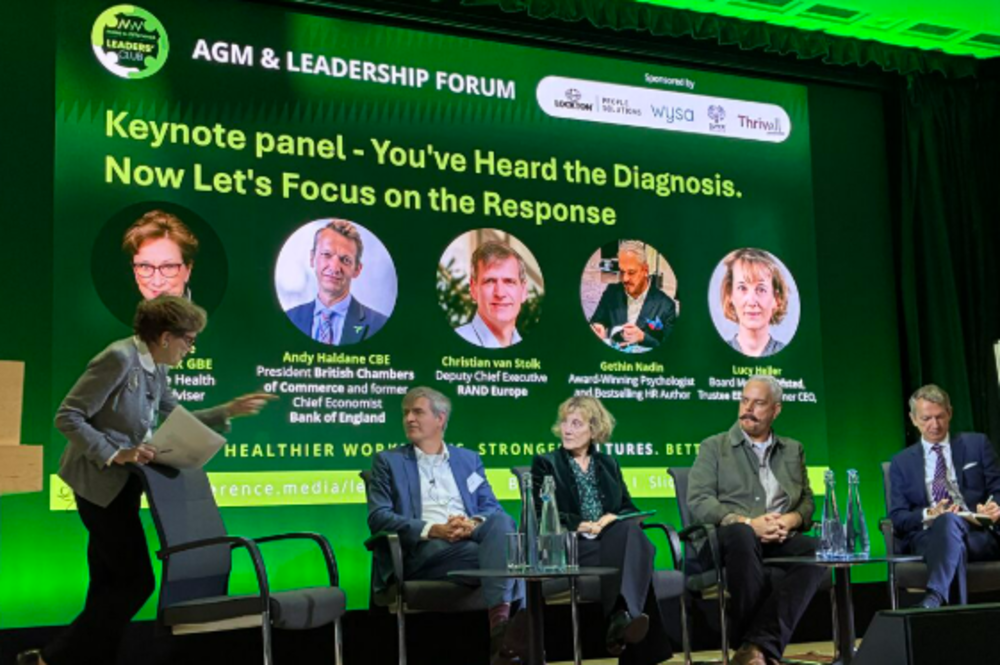
“Women’s health: beyond the menopause mandate” is the focus of one of the 15 lunchtime peer-group discussions that will be taking place at our Make a Difference Leaders’ AGM & Leadership Forum, taking place at the British Library on Monday 19th October. You can find out more about the event by completing the form here to receive the agenda and link to register.
You might also like: