
Large employers now provide an impressive range of health and mental health support, but in my discussions with health leaders, it seems to be the same concerns that keep surfacing. Employees struggle to work out where to go, and employers struggle to understand what happens after they get there.
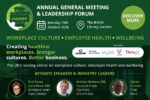
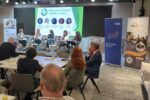
“From Maze to Map: Designing a Joined-up Pathway Through Existing Mental Health Support” is the focus of a workshop that John Tench from Wysa will be running at our Make a Difference Leaders AGM & Leadership Forum, taking place at the British Library on 19th October. You can find full details and register your interest in attending here.
Why employees struggle to navigate workplace health and wellbeing support
Let’s look at a very typical (fabricated) story. Rachel recently returned from maternity leave. Months of disrupted sleep left her exhausted and worried about returning to work and leaving her baby in a nursery. She was struggling to concentrate and lost confidence in her ability to do her job, she began to wonder whether she should continue working at all.
Her employer benefits package included an Employee Assistance Programme, mental health cover through a private medical insurer, occupational health, two wellbeing apps and self help worksheets on a portal. Rachel started with the EAP because it was the telephone number she could find and she wanted to speak to a human. She attended a few counselling sessions. They helped her talk through how she was feeling but her symptoms continued to worsen. Before quitting work, her husband encouraged her to go to her GP and ask for NHS Talking Therapies. That meant explaining her history, completing a new assessment and waiting to discover what support might be available. Meanwhile her work was becoming harder to manage. Support was available to Rachel throughout, and her private medical cover would have fast tracked her into a higher level of care. What was missing was a coherent journey.
Employees wanting support have to decide whether their problem is physical, psychological, personal or work-related, temporary or clinical. They might need to choose between self-help, short-term counselling, structured therapy, specialist treatment and urgent care. These are difficult distinctions even for a health professional. Some health leaders I spoke with recently described employees ping ponging from one service to another before reaching suitable support. A safe and effective alternative must be able to distinguish between them.
The hidden problem: fragmented employee health data and disconnected services
Fragmentation continues after an employee enters support: The EAP records an employee had attended counselling. A therapy provider records a reduction in an employee’s anxiety symptoms. HR knew that Rachel took three weeks’ leave as sickness absence. Occupational health recommended a phased return and noted Rachel’s mention of using the help offered already.
Each part of the system knew something but nobody saw the complete journey. Did Rachel receive the right level of care at the beginning? Did the delay in reaching structured treatment contribute to her sickness absence? Did therapy help her return to work successfully? Were workplace adjustments introduced at the right point? Did the improvement last? An employer with a top class provision could report activity across every service and still be unable to answer these questions.
One health leader described how she was sitting on a gold mine of occupational health information with no effective way to use it. Everyone I speak to can demonstrate engagement with services and positive outcomes for individual programmes, but cannot connect them with any measurable improvement in sickness absence data.
Why measuring utilisation alone doesn’t show whether workplace health support works
Utilisation is the most common way to assess employee health support because it is straightforward to count. Improvements in GAD and PHQ, meanwhile, are well respected outcome measures but not when left as standalone data. The more useful questions follow the employee’s journey, for example, did the employee reach appropriate support? Did their health improve? If they went off sick, did they return to work successfully?
Direct influence on sickness absence should not become the test of every intervention and wellbeing benefit provided. A programme might improve health, confidence or quality of life without immediately reducing sickness absence, for example, but sickness absence data and return-to-work outcomes can’t continue to be separated from utilisation and clinical outcomes.
The CIPD’s 2025 research found that employees were absent for an average of 9.4 days a year, up from 7.8 days in 2023 and 5.8 days in 2022. It was the highest figure recorded by the survey in more than 15 years.
How clinically governed care navigation can improve employee health outcomes
Employers don’t need to become healthcare providers themselves, but they do need, and deserve, a better understanding of whether their investment is helping people reach effective support, recover and remain in work. This calls for an aggregate view of how employees move through the health system, rather than access to anyone’s private medical information.
Private medical insurers have previously faced a similar set of challenges. As their networks expanded to include digital support, therapists, clinicians and specialist providers, meaning members needed heavy handholding or third party suppliers trusted to make decisions. These insurers began introducing infrastructure that combined direct access, assessment, care navigation and onward referral, to evaluate a person’s needs against suitable thresholds and guide them towards appropriate support, rather than requiring every member to self-identify what they need and potentially ending up in an unsuitable dead end.
The future of workplace health: connecting employee journeys, not just services
The opportunity for employers goes beyond offering a digital front door or navigation chatbot. What’s needed is clinically governed care navigation across the network of support that’s already in place, helping each employee find the path for them. This means adding an infrastructure layer that sits above the EAP, the insurer, self-help tools and occupational health: a shared assessment at the point someone asks for help, automated care coordination that knows who the person is and what they’ve already tried, and aggregate reporting that joins utilisation data to outcomes so the employer can see the whole journey, including how it related to sickness absence or return to work.
Employers have already invested in the right services, and they already hold much of the information. The next phase is to connect the employee and the data around their journey, rather than expecting someone who is unwell to navigate a fragmented system for themselves.
“From Maze to Map: Designing a Joined-up Pathway Through Existing Mental Health Support” is the focus of a workshop that John Tench from Wysa will be running at our Make a Difference Leaders AGM & Leadership Forum, taking place at the British Library on 19th October. You can find full details and register your interest in attending here.
About the author:
Sarah Baldry is CMO at Wysa. She writes and speaks on the intersection of marketing, mental health, and workplace culture. Wysa provides digital mental health infrastructure that helps people access appropriate support, from evidence-based self-help through to human coaching, therapy and clinical care.
Historically, Wysa has worked directly with employers including Accenture, L’Oréal and Bosch. Today it also partners with health insurers, NHS Talking Therapies and other healthcare providers, supporting digital intake, navigation and care pathways.
You might also like